One-stop Laser Industry Solution
Leave Your Message

How to Choose a Metal Laser Cutting Machine for Home Use?

Choosing a Metal Laser Cutting Machine For Home begins with an honest look at the workbench. Are you cutting thin stainless steel, making small brackets, or only marking finished parts? These jobs need different machines. A compact diode laser may mark coated metal, but it usually cannot cut solid sheet. A fiber laser is designed for metal processing, yet its price, power needs, and safety requirements may exceed a casual hobby setup. That matters.

Check the machine’s tested cutting capacity, not just its headline wattage. Ask which metals and thicknesses it can cut, and whether those results come from the manufacturer or independent tests. Leave room for the machine, material sheets, and clear access around the work area. Strong ventilation and suitable laser shielding are essential, not optional extras. Small is not simple. A reflected beam, fumes, or an unstable workpiece can create serious hazards.

This guide will help compare laser types, usable cutting area, software, installation needs, and ongoing costs. It will also explain what to verify with a supplier before buying, including service support and realistic sample cuts. I would not choose a machine from price alone; that shortcut can be costly. Home workshops vary, and product specifications do not tell the whole story. The best choice is the one that fits your actual projects, available space, and ability to operate it safely.
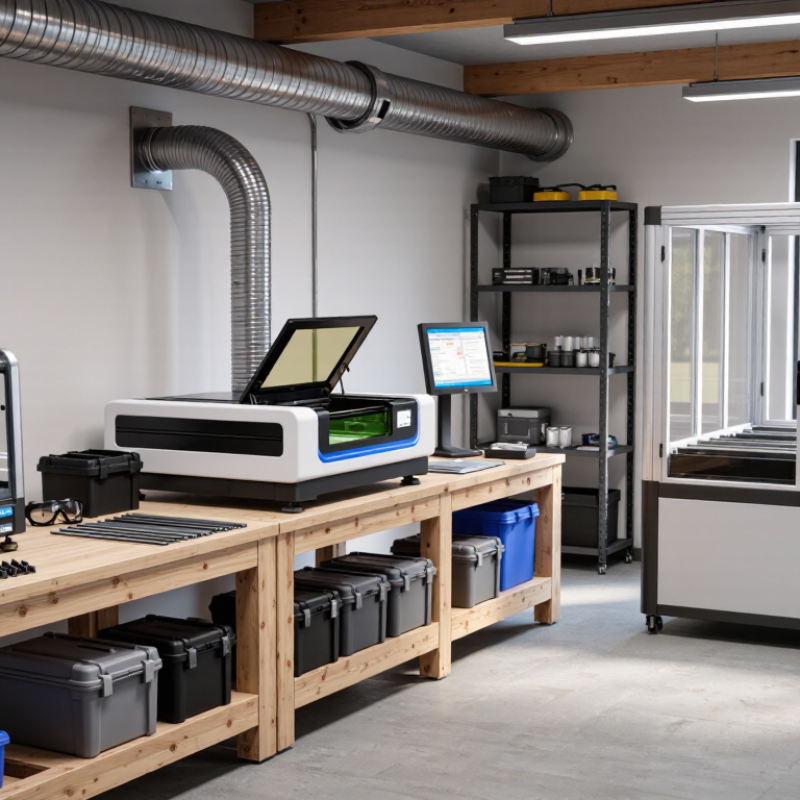
How to Choose a Metal Laser Cutting Machine for Home Use?

Identify Metals and Sheet Thickness Before Comparing Laser Power Ratings

Before comparing laser power, write down the exact metal and its maximum thickness. “Steel” is not specific enough: mild steel, stainless steel, and aluminum absorb laser energy differently. Note the alloy, whether the sheet is coated, and the thickest piece you realistically expect to cut. A shiny aluminum offcut and a painted steel panel can behave very differently under the same settings.

Industry figures show how broad these material categories are, but they do not prescribe a machine. World Steel Association’s World Steel in Figures 2024 reports 1,892.2 million tonnes of crude steel production in 2023. The U.S. Geological Survey’s Mineral Commodity Summaries 2024 estimates global primary aluminum output at about 70 million tonnes that year. These reports describe production, not cutting capacity. For a home setup, check the machine’s stated cutting limits for your specific metal, then verify them against a suitable material datasheet or a controlled test coupon.

Thickness matters, too. A machine that marks thin sheet may not cut it cleanly; edge quality, assist gas, focus, and bed support all matter. Ask for cutting data at your target thickness, not just a maximum-power figure. Keep a small sample nearby. Measure the actual sheet with calipers, since nominal thickness can be a little optimistic. I still double-check that. A carefully chosen machine can handle your routine work, but unusual alloys or thicker stock may need professional processing.
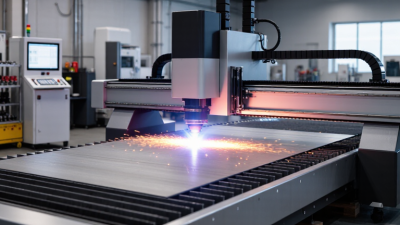
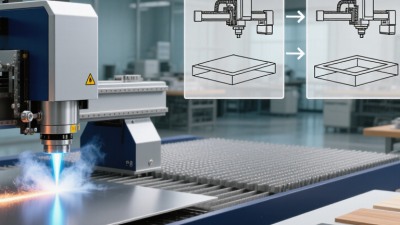
Identify Metal and Sheet Thickness Before Comparing Laser Power

Nominal thickness equivalents for selected U.S. sheet-metal gauge numbers

Gauge numbers do not represent the same thickness across metals. For example, 16-gauge aluminum is about 1.29 mm, while 16-gauge stainless steel is about 1.59 mm. Confirm the metal type and measure the sheet in millimeters before comparing machine power or cutting specifications.

Compare 1.06 μm Fiber and 10.6 μm CO₂ Laser Wavelengths

For home metal cutting, wavelength affects how efficiently a sheet absorbs the beam. Fiber systems commonly operate near 1.06–1.07 μm, while CO₂ systems use 10.6 μm. The Laser Institute of America’s Handbook of Laser Materials Processing identifies these as established industrial laser wavelengths. For many metals, the shorter fiber wavelength couples more readily, especially during piercing and cutting thin stainless steel or aluminum. That can mean faster starts and less wasted power, but actual results still depend on beam quality, power, focus, and assist gas.

CO₂ remains capable of cutting metal, particularly with suitable power and process settings. Its longer wavelength is also useful for many nonmetals, though that is a separate task. A wavelength comparison alone can mislead. The NIST Chemistry WebBook and optical-property references show that material response varies with composition and surface condition; polished metal may behave differently from oxidized sheet. At home, test coupons tell you more than a specification label. Watch the cut edge, dross, and heat discoloration under the same settings. A small caveat: lower purchase cost does not guarantee lower running cost. Fiber equipment may simplify metal work, while enclosure, extraction, and electrical requirements still deserve careful checking.

How to Choose a Metal Laser Cutting Machine for Home Use? — Compare 1.06 μm Fiber and 10.6 μm CO₂ Laser Wavelengths

Comparison Factor Fiber Laser (about 1.06 μm) CO₂ Laser (about 10.6 μm) What It Means for Home Use
Laser source Uses a solid-state laser source, commonly based on an ytterbium-doped fiber. Uses a gas laser source, typically a mixture that includes carbon dioxide. Source design affects machine size, maintenance needs, and the type of materials the system is best suited to process.
Wavelength Typically around 1.06–1.07 μm. Typically around 10.6 μm. The wavelength strongly affects how efficiently different materials absorb laser energy.
Metal absorption Metals generally absorb this wavelength more effectively than they absorb a 10.6 μm CO₂ beam. Many metals reflect or absorb the beam less effectively, particularly at the start of processing. For a machine primarily intended to cut metal, fiber is generally the more suitable technology.
Common metal applications Widely used for cutting sheet metals such as mild steel, stainless steel, aluminum, and copper, with suitable machine settings and assist gas. Can cut some metals when the system has appropriate power, optics, and assist-gas arrangements, but is less commonly selected for dedicated metal cutting. Check the machine’s specified material and thickness range; wavelength alone does not determine cutting capability.
Reflective metals Suitable systems can process reflective metals, but the machine must be designed with appropriate protection against reflected laser energy. Metal reflection can make processing difficult and may create risks for the laser system. For aluminum, copper, or brass, confirm that the machine is explicitly rated for the material and includes suitable safeguards.
Non-metal materials Usually not the preferred choice for cutting common non-metals such as wood, acrylic, paper, or fabric. Commonly used for many non-metals, including acrylic, wood, paper, and fabric, subject to material-specific fire and fume controls. If the main goal is crafts or non-metal cutting, a CO₂ machine may be a better fit than a metal-focused fiber system.
Assist gas and extraction Metal cutting commonly uses assist gas, such as oxygen, nitrogen, or compressed air, depending on the material and desired edge. Metal cutting also requires suitable process gas and extraction; non-metal work produces smoke and fumes that must be captured. Include gas supply, ventilation, filtration, and safe exhaust in the total setup—not just the machine purchase.
Home installation A metal-cutting setup may need a guarded enclosure, extraction, electrical capacity, cooling provisions, and space for gas equipment. A CO₂ setup may require space for the machine and optics, cooling equipment on some models, and effective fume extraction. Check the machine’s footprint, power requirements, noise, cooling, ventilation, and local safety rules before buying.
Safety considerations Near-infrared fiber laser light is invisible and can cause severe eye or skin injury. A fully enclosed, interlocked system is strongly preferred. CO₂ laser light is also invisible and hazardous. Enclosure, interlocks, suitable protective measures, and fire precautions are essential. Do not operate an open-beam machine in a living space. Follow the manufacturer’s safety instructions and applicable regulations.
Best fit by primary task Metal sheet and part cutting, when the machine is properly specified for the material and thickness. Non-metal cutting and engraving; metal cutting is possible on suitable systems but is not the typical strength. Choose by the materials you will process most often, then verify cutting capacity, safety provisions, and operating costs.

Note: Actual cutting performance depends on laser power, beam quality, optics, material grade, thickness, assist gas, and machine design. Always use the manufacturer’s material specifications and safety guidance.

Read Cut Charts: 1 kW Output Does Not Set One Universal Cut Thickness

A 1 kW rating does not translate into one dependable thickness limit. The cut chart matters because material grade, assist gas, nozzle, focus, and cutting speed all affect the result. The Laser Institute of America’s process guidance likewise treats laser cutting as a combination of beam and material conditions, not power alone. Small changes show up at the edge.

Material data helps explain why charts differ. ASM International’s Metals Handbook lists thermal conductivity at roughly 16 W/m·K for 304 stainless steel and 167 W/m·K for 6061 aluminum near room temperature; exact values vary by condition. Conductivity is not a cut-thickness formula, but it warns against assuming two metals behave alike. Check the chart for the exact material and gas, then test a coupon: inspect the underside for dross and measure the kerf. A clean top edge can still hide a rough exit. I would treat advertised maximum thickness as a starting point, not a promise. Real workshop results can be less tidy.

Plan Class 4 Laser Controls Under IEC 60825-1 Before Home Installation

A metal laser cutter can look compact on a product page, yet Class 4 operation changes the home-installation plan. Under IEC 60825-1, this class can present serious hazards from direct and reflected beams. A closed lid alone is not a complete safety strategy. Check the machine’s classification, intended materials, and safety documentation before choosing a room.

Plan the enclosure and its interlocks before delivery. The laser should stop when a protective panel opens, and access should remain controlled during operation. Add a visible operating indicator, an emergency stop within easy reach, and a clear warning at the entrance. These controls need to work together. Not just look reassuring. Keep reflective tools and loose metal away from the beam path, and use only eyewear specified for the laser’s wavelength and required protection level. Eyewear is a backup, not a substitute for an enclosed beam path.

Home details matter too. Allow space for the exhaust duct, fire-resistant surfaces, electrical capacity, and safe material handling. Confirm where fumes will go; a window fan may not capture them reliably. Keep children, pets, and visitors out of the work area. Before use, test interlocks and emergency controls using the maker’s documented procedure. I would not assume a garage is suitable just because it has a concrete floor. Have a qualified laser-safety professional review the setup against the applicable IEC 60825-1 edition and local requirements.

Size Fume Controls for OSHA’s 5 μg/m³ Cr(VI) 8-Hour Exposure Limit

How to Choose a Metal Laser Cutting Machine for Home Use?

When comparing machines, look beyond cutting area and wattage. Cutting stainless steel or other chromium-containing alloys can create hazardous fumes and fine particles, including hexavalent chromium (Cr(VI)). The amount varies with the material and cutting conditions. A closed enclosure helps, but it is not a complete control by itself.

OSHA sets a Cr(VI) permissible exposure limit of 5 micrograms per cubic meter as an 8-hour time-weighted average in covered workplaces. For home use, treat that figure as a useful safety reference, not proof that a machine or filter is safe. Choose a system with effective extraction at the cutting zone and filtration specified for the expected metal particulates. Check airflow requirements, filter replacement guidance, and whether exhaust can be discharged safely. A small room can accumulate contaminants quickly. Even a quiet fan may move too little air.

Tips: Keep the extraction inlet close to the cutting area. Don’t rely on an ordinary room purifier. If you cut chromium-containing metal regularly, ask a qualified exposure-control professional about testing; appearance and smell cannot confirm safe air. A little uncertainty remains without measurement.