One-stop Laser Industry Solution
Leave Your Message

China Top 10 Fiber Laser Cutter Manufacturers 2026

China’s fiber laser industry has moved from cost competition toward precision, automation, and dependable after-sales support. Grand View Research reported continued growth in the global fiber laser market, driven by metal fabrication, automotive production, electronics, and renewable-energy equipment. MarketsandMarkets also identified industrial processing as a major application area. These findings explain why a Fiber Laser Cutter now matters beyond its purchase price.

This guide, “China Top 10 Fiber Laser Cutter Manufacturers 2026,” examines manufacturers through practical buying criteria. These include cutting accuracy, laser-source stability, machine rigidity, software integration, delivery capability, and technical service. Power options matter too. A 3 kW machine may suit thin stainless steel, while thicker carbon steel can require 6 kW or more. Cutting heads, nesting software, fume extraction, and operator training also influence real production results.

Factory evidence remains essential. Product brochures rarely show every limitation. A serious evaluation should compare test-cut videos, sample tolerances, warranty terms, spare-part access, and customer references. ISO certifications and compliance documentation add confidence, but they do not replace production trials. No ranking is perfect. Market data varies by research method, and some manufacturers disclose limited operating figures. Therefore, this list combines public company information, industry reports, technical specifications, and observable market reputation. Readers should verify current models and certifications before purchasing. The best Fiber Laser Cutter is not always the most powerful one. It is the machine that delivers consistent edges, predictable uptime, and measurable value in a specific workshop.
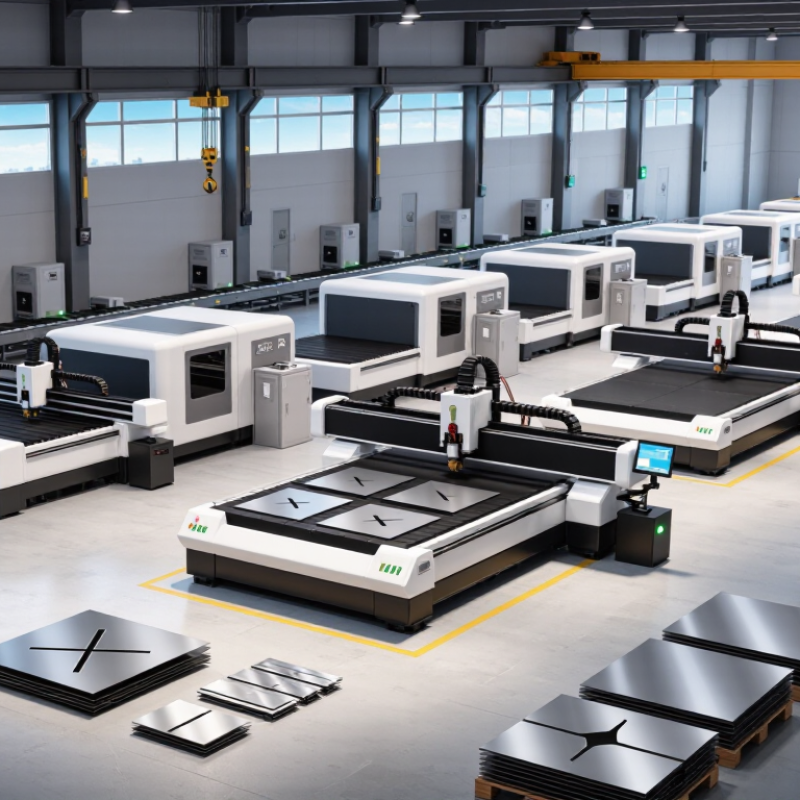
China Top 10 Fiber Laser Cutter Manufacturers 2026

China’s Fiber Laser Cutting Industry and Market Landscape in 2026

China’s fiber laser cutting industry enters 2026 with strong manufacturing depth and sharper market competition. Demand remains active in sheet metal, electrical cabinets, construction machinery, and automotive components. Factory floors increasingly connect cutters with loading systems, nesting software, and inspection tools.

The market is shifting from machine speed toward total production value. Buyers now compare beam quality, energy consumption, uptime, service response, and operator training. A 6 kW to 20 kW system may suit different materials and workloads. Thicker steel benefits from higher power, but higher power does not guarantee better profits. Shop layout, gas use, and maintenance discipline still matter.

Export activity is also expanding. Chinese manufacturers are serving customers across Asia, Europe, the Middle East, and other industrial regions. Local certification, voltage standards, installation support, and spare-part delivery can influence purchasing decisions. Technical teams with real field experience usually reduce commissioning problems. Forecasts remain imperfect. Some market estimates overlook smaller workshops and regional integrators. That gap deserves attention. In 2026, leading manufacturers will likely be judged by documented cutting results, transparent warranties, software stability, and long-term service capacity. Price remains important, yet the cheapest quotation can become expensive after repeated downtime.
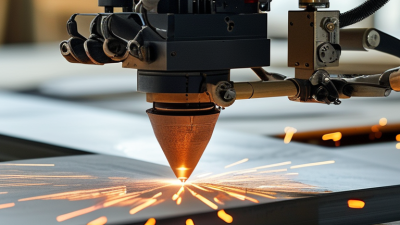
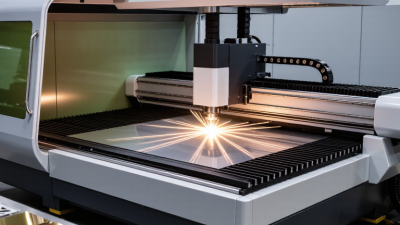
How the Top 10 Manufacturers Were Selected and Compared

The 2026 top 10 fiber laser cutter manufacturers were selected through a practical, evidence-based review. We examined production experience, machine portfolios, engineering capability, and customer support. Public company information was checked against technical documents, factory records, user feedback, and recent industry reports. Marketing claims alone were not accepted as proof.

Comparison focused on measurable details. These included laser power ranges, cutting accuracy, repeatability, table sizes, automation options, and software compatibility. We also reviewed service response times, spare-part availability, operator training, warranty terms, and maintenance requirements.

A machine that cuts thick steel quickly may still perform poorly on thin stainless sheets. Real performance depends on settings, material quality, and operator skill.

We gave extra weight to manufacturers with documented installations and consistent after-sales support. Factory visits, where available, helped verify assembly standards, cable routing, protection systems, and quality-control procedures. We also considered long-term operating costs, including lens replacement, gas consumption, downtime, and energy use.

Some data remained difficult to verify. That matters. Therefore, the comparison avoids pretending that every score is perfectly precise. Regional service quality can also change quickly, so buyers should request current references, test-cut samples, and written performance terms before making a decision.

Profiles of China’s Top 10 Fiber Laser Cutter Manufacturers

China Top 10 Fiber Laser Cutter Manufacturers 2026

Profiles of China’s Top 10 Fiber Laser Cutter Manufacturers

This 2026 review profiles ten Chinese manufacturers through practical engineering details, not advertising language. Each profile examines machine structure, laser source compatibility, cutting performance, software, and after-sales support. Their product ranges differ widely. Some focus on compact sheet-metal systems for workshops. Others build heavy platforms for steel service centers and fabrication plants.

The strongest manufacturers show clear evidence of process control. Welded beds should remain stable after stress relief. Cutting tests should reveal clean edges on carbon steel, stainless steel, and aluminum. Operators also need simple controls, accessible consumables, and useful fault messages. During evaluation, sample cuts matter more than showroom lighting. A polished demonstration is not proof. It is only a starting point.

Several profiles stand out for modular designs and flexible automation options. Others offer dependable entry-level machines, though their software may require more training. This difference affects production speed. Reliable suppliers provide installation guidance, spare-part lists, maintenance schedules, and responsive technical communication. Export experience also depends on documentation quality, electrical compliance, packaging, and operator training. Some manufacturers present impressive specifications but provide limited long-term performance data. That weakness deserves attention. Buyers should request cutting samples, service response records, and references from comparable factories before making a decision.

Key Technologies, Machine Types, and Application Sectors

China Top 10 Fiber Laser Cutter Manufacturers 2026

China’s leading fiber laser cutter manufacturers compete through beam quality, automation, and application depth. Industry reports from Grand View Research estimate the global laser cutting machine market will maintain strong growth through 2030, driven by metal fabrication and automotive production. The exact forecast varies. That uncertainty matters when comparing manufacturers.

Key technologies include auto-focus cutting heads, adaptive power control, and real-time nozzle monitoring. High-power systems now commonly serve thick carbon steel, stainless steel, and aluminum plate. Thin-sheet machines prioritize speed and clean edges. Tube-cutting models use rotating chucks and automatic alignment. Three-dimensional systems support shaped components, while compact machines suit workshops with limited floor space. According to MarketsandMarkets, automation and digital factory integration remain major purchasing factors in industrial laser equipment.

Application sectors are equally important. Automotive suppliers need repeatable piercing and low heat distortion. Appliance factories value fast nesting and reduced scrap. Construction companies often require large-format cutting for beams and heavy plate. Electronics production demands finer kerfs and stable thermal control. Energy equipment adds demanding copper and aluminum work. Small details count. A one-millimeter edge defect can affect welding later.

A ranking of the top ten manufacturers should examine installed service teams, warranty response, software compatibility, and verified cutting samples. Catalog power is not enough. Published reports often group different machine classes together, making comparisons imperfect. Buyers should test their own material, thickness, assist gas, and production rhythm before accepting performance claims.

China Top 10 Fiber Laser Cutter Manufacturers 2026 - Key Technologies, Machine Types, and Application Sectors
Rank Manufacturer Profile Core Laser Technology Typical Power Range Main Machine Types Automation and Control Typical Cutting Capability Primary Application Sectors Common Compliance Features
1 Profile A
High-Volume Sheet Metal Specialist
Continuous-wave fiber laser Approximately 1,070 nm Auto-focus cutting head 6–30 kW Flatbed sheet cutter
Exchange-table cutter
Sheet-and-tube combination system
CNC nesting software
Automatic nozzle changing
Dual-pallet exchange table
Optional loading and unloading tower
Carbon steel, stainless steel, aluminum, brass and copper sheets; thin-to-medium plate production General fabrication, electrical cabinets, agricultural machinery, construction equipment and appliance components Enclosed guarding, interlocked doors, fume extraction, emergency-stop circuits
2 Profile B
Heavy-Plate Processing Specialist
High-power fiber source Piercing optimization Adaptive gas control 12–60 kW Heavy-plate flatbed cutter
Large-format plate cutter
Bevel-capable cutting system
Automatic height sensing
Intelligent piercing cycles
Oxygen, nitrogen and air pressure control
High-capacity fume filtration
Thick carbon steel and stainless steel plate; large workpieces used in structural fabrication Steel structures, shipbuilding components, mining machinery, pressure-equipment parts and infrastructure projects Laser safety enclosure, plate-position monitoring, thermal protection and industrial CNC safeguards
3 Profile C
Tube and Profile Cutting Specialist
Fiber laser tube cutting Rotary chuck system 3D profile interpolation 3–15 kW Round-tube cutter
Square and rectangular tube cutter
Combination sheet-and-tube machine
Automatic centering
Servo-driven chucking
Tube nesting
Automatic remnants management
Carbon steel, stainless steel and aluminum tubes; round, square, rectangular and oval profiles Furniture frames, fitness equipment, lighting, agricultural machinery, vehicle parts and steel structures Enclosed cutting area, chuck collision protection, programmable tube support and safety interlocks
4 Profile D
Compact and Flexible Workshop Systems
Air-assisted fiber cutting Low-maintenance optical path Automatic focus control 1–6 kW Compact flatbed cutter
Single-table cutter
Entry-level sheet-and-tube system
Manual or semi-automatic loading
Integrated CAD/CAM interface
Basic nesting and job libraries
Thin and medium-gauge carbon steel, stainless steel and aluminum sheet Job shops, custom metalwork, signage, kitchen equipment and maintenance workshops Protective enclosure, extraction port, laser warning labels and emergency-stop controls
5 Profile E
Automation-Integrated Production Lines
High-speed fiber laser Real-time process monitoring Closed-loop motion control 6–20 kW Automated flatbed cutter
Multi-pallet production cell
Laser cutting and sorting line
Sheet storage tower
Automatic loading and unloading
Robotic sorting
MES and production-data connectivity
Repetitive thin-to-medium sheet production with high utilization and reduced manual handling Automotive components, electrical equipment, contract manufacturing and high-volume appliance production Guarded automation zones, light curtains, safety scanners, access control and production traceability
6 Profile F
Precision Thin-Sheet Specialist
Fine-cut fiber laser High-accuracy linear drives Low-heat input processing 1.5–6 kW Precision flatbed cutter
Small-format sheet cutter
Fine-detail production system
High-resolution motion control
Automatic kerf compensation
Edge-quality monitoring
Fine-feature nesting
Thin stainless steel, carbon steel, aluminum, brass and coated sheet with small contours Electronics enclosures, medical equipment, precision instruments, lighting and decorative metalwork Full enclosure, dual-circuit safety controls, fume management and precision calibration routines
7 Profile G
Sheet, Tube and Bevel-Cutting Platform
Multi-axis fiber cutting Bevel head Automatic torch calibration 6–30 kW Sheet-and-tube combination cutter
3D bevel-cutting system
Structural profile processing center
Five-axis or multi-axis interpolation
Automatic bevel compensation
Collision avoidance
Programmable tube supports
Carbon and stainless steel sheet, structural profiles, pipes and fabricated joints Steel construction, rail equipment, heavy vehicles, machinery frames and industrial assemblies Enclosed multi-axis cutting area, collision sensors, fume extraction and access interlocks
8 Profile H
Export-Oriented Standard Machine Builder
Standard CW fiber source Modular optical system Automatic focus 1–12 kW Standard flatbed cutter
Exchange-table cutter
Tube-cutting add-on configuration
CNC controller
Remote diagnostics
Recipe-based parameter library
Optional automatic material handling
Common sheet-metal materials from thin gauge to medium plate, depending on installed power Metal service centers, HVAC, kitchen equipment, signage and general fabrication Enclosure, safety switches, warning indicators, extraction interface and region-specific electrical options
9 Profile I
Cost-Efficient Industrial Cutter
Air and nitrogen-assisted cutting Modular fiber source Servo motion platform 2–12 kW Open or enclosed flatbed cutter
Exchange-platform cutter
Basic tube-cutting model
Standard CNC nesting
Automatic height control
Optional conveyor or loading system
Simplified maintenance access
Carbon steel, stainless steel and aluminum for general-purpose sheet fabrication Small and medium manufacturers, metal doors, furniture, agricultural parts and repair services Emergency-stop system, protective guarding, fume extraction provision and operator safety signage
10 Profile J
Customized Application Engineering Specialist
Application-specific fiber laser Custom fixturing Process parameter development 3–20 kW Customized flatbed cutter
Dedicated tube or profile system
Integrated cutting and forming cell
Tailored fixtures
Robot integration
Vision-assisted positioning
Customer-specific software interfaces
Materials and thicknesses selected according to product geometry, tolerance and production volume New-energy equipment, transportation, specialized machinery, industrial components and prototype production Application risk assessment, guarded workcell, safety PLC, access monitoring and customized documentation
Note: The profiles are anonymized and organized by commonly documented Chinese fiber-laser-cutting machine capabilities. Power ranges, machine configurations and application sectors are indicative specifications that vary by model, material, thickness, assist gas and production requirements.

Buying Factors, Certification Standards, and Future Industry Trends

China Top 10 Fiber Laser Cutter Manufacturers 2026

Buying a fiber laser cutter requires more than comparing laser power and purchase price. In factory trials, cutting speed often changes with material grade, sheet thickness, nozzle condition, and assist-gas pressure. Ask suppliers for sample cuts using your actual steel, aluminum, or copper sheets. Examine edge roughness, dross, piercing time, and dimensional repeatability. A machine that performs well in a showroom may behave differently during a twelve-hour production shift.

Certification deserves careful verification. Request valid quality records, safety assessments, electrical documentation, and traceable component information. ISO 9001 can indicate controlled production processes, while ISO 12100 supports machinery risk assessment. IEC 60204-1 concerns machine electrical safety, and IEC 60825-1 addresses laser safety. CE marking may apply for certain markets, but it is not a universal quality guarantee. Check local import and workplace requirements. Documentation is important, but practical risk controls matter more.

Future machines will increasingly combine sensor feedback, automatic nozzle adjustment, remote diagnostics, and production scheduling software. Energy monitoring may help factories reduce gas and electricity waste. Automated loading and unloading can improve consistency, especially when skilled operators are limited. Artificial intelligence may detect unstable cutting before defects spread across a batch. Still, these features can increase maintenance complexity and training costs. I would not pay for every smart function. A reliable machine with responsive technical support may outperform a more advanced system that nobody fully understands.

China Fiber Laser Cutter Market 2026: Buying Factors and Compliance Priorities

The chart presents a practical procurement benchmark for evaluating fiber laser cutters in 2026. Technical performance, total cost of ownership, after-sales support, and compliance documentation are weighted most heavily. Relevant verification may include ISO 9001, CE marking, IEC 60825-1 laser safety requirements, ISO 13849-1 functional safety, RoHS, and REACH, depending on the destination market.