One-stop Laser Industry Solution
Leave Your Message

How to Choose a Steel Laser Cutter in 2026?

Choosing a Steel Laser Cutter in 2026 is less about chasing the highest wattage and more about matching the machine to real production work. A shop cutting 6 mm mild-steel brackets has different needs from one processing thick plate or stainless panels all day. Check the materials, thickness range, daily cutting hours, required edge quality, and available floor space before comparing machine specifications. A polished brochure cannot show how a cut edge looks after a long shift.

For a transparent buying perspective, this guide uses an illustrative shop-floor voice rather than a verified quotation: process engineer Alex Chen says, “Choose the cutter for the jobs you run every week, not the thickest sheet you might cut once.” Treat that as a decision rule, not a sourced expert endorsement. Then examine laser power, cutting-head design, motion accuracy, nesting software, extraction, maintenance access, and local service support. Ask suppliers for sample cuts using your actual steel grade and thickness. Inspect the edge, kerf, corners, and dross under ordinary production settings.

The cheapest quote may leave costly gaps. Look closely at installation, training, consumables, warranty terms, and response times for service. A smaller machine can be the sensible choice. Or not. The right Steel Laser Cutter should fit your workload, operators, budget, and growth plans without relying on optimistic assumptions. This guide breaks those choices into practical questions, so you can compare machines with evidence rather than wattage alone.
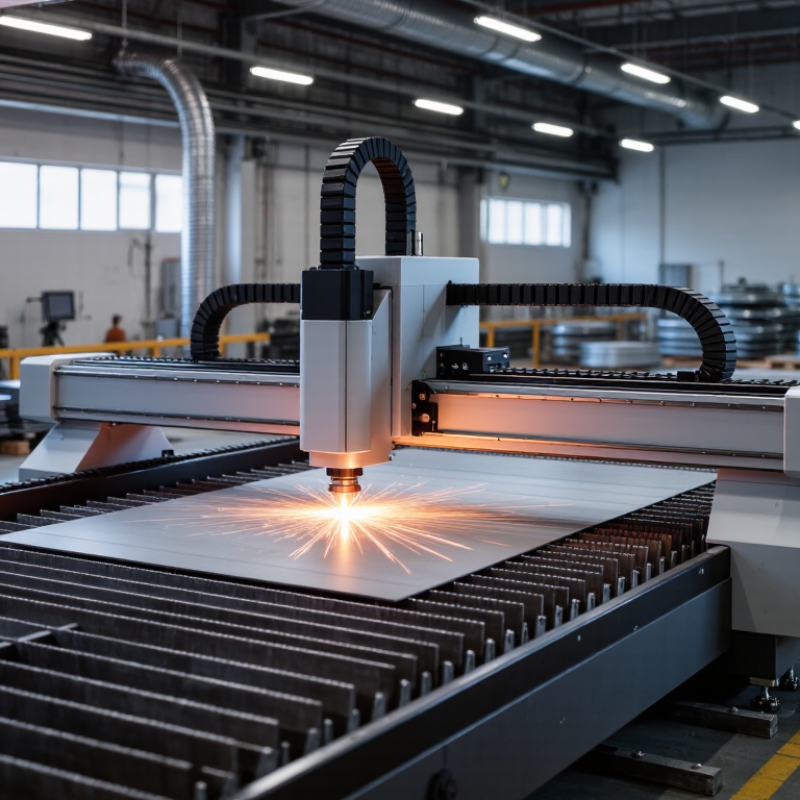
How to Choose a Steel Laser Cutter in 2026?

Identify Steel Grades, Thickness, and Cut Quality Under ISO 9013

Choose the exact steel grade before comparing laser cutters. Mild steel, high-strength low-alloy steel, and stainless steel can react differently to heat and assist gas. That matters. Ask suppliers to test your own material, including its coating and surface condition, rather than relying only on a polished sample. Record thickness, grade, and required edge finish for each job. A machine that cuts thin sheet cleanly may struggle with thicker plate or tight tolerances.

Use ISO 9013:2017 to specify cut quality, not vague terms such as “smooth edge.” The standard defines five quality ranges and assesses characteristics including perpendicularity or angularity tolerance and mean profile height. Match the required range to the part’s function, and check the relevant thickness tables. A bright edge can still have unacceptable taper or roughness. World Steel Association’s World Steel in Figures 2025 reports 1,882.6 million tonnes of crude steel production in 2024, underscoring the scale and variety of steel supply. Shop-floor results are rarely as tidy as catalog charts. Request measured test-cut results, note the settings, and inspect for dross, striations, and heat-affected edges under consistent conditions.
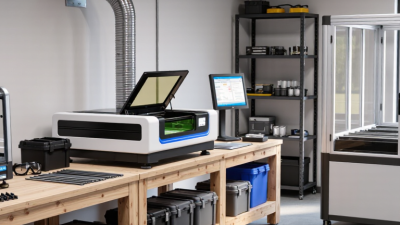
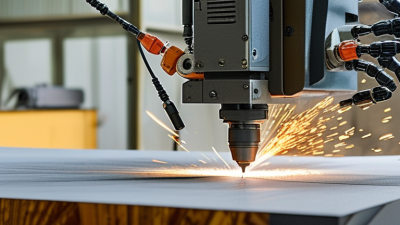
Match Fiber-Laser Power to Steel Thickness and 1.06–1.08 μm Wavelength

A steel laser cutter should be matched to the thickness you actually process, not the thickest piece you might cut once a year. Fiber lasers commonly operate near 1.06–1.08 μm, a wavelength well suited to cutting steel. It delivers energy into a small spot. Power determines how quickly that energy reaches the plate, but more power alone does not guarantee a clean edge. For sheet around 1–3 mm thick, a lower-power system may be sufficient. Plate around 6–12 mm usually calls for higher output and careful setup. These are starting points, not promises.

Check cutting charts for the exact steel grade, thickness, and assist gas. Mild steel and stainless steel can behave differently. Ask for a test cut on material close to your own, then inspect the underside for burrs and the edge for heat discoloration.

Small details matter. Nozzle condition, focus position, and cutting speed can change results. I would not choose a machine from maximum-power figures alone; they can hide slow production speeds on thicker plate.

A slightly slower cut may be more useful if it produces consistent parts. That trade-off is easy to overlook.

Choose Nitrogen, Oxygen, or Air Assist for the Required Edge Quality

Nitrogen, oxygen, and compressed air can produce noticeably different edges on the same steel sheet. Nitrogen shields the cut from oxygen, leaving a bright edge with little oxide. It is often preferred when parts will be painted, welded, or used without extra cleanup. The trade-off is gas use: high-pressure nitrogen can add substantial operating cost, especially on long production runs.

Oxygen supports combustion at the cut, so it can help process thicker mild steel efficiently. The edge may carry dark oxide or a rougher finish, which can mean more grinding before coating or welding. That matters. A faster cut is not always a cheaper part once cleanup time is included. Results also depend on steel grade, thickness, nozzle condition, and the machine’s settings.

Compressed air can be a practical lower-cost option for some thin and medium steel work. Its mixed gases may leave more oxidation than nitrogen, and inconsistent moisture or oil can spoil the edge. A dry, filtered air supply is essential. There is no universally cleanest choice. Before selecting a cutter, run test cuts using your actual steel, thickness, and finish requirements. Compare edge appearance, dross, cutting speed, and cleanup time—not just the machine’s advertised maximum thickness. A modest test can reveal an inconvenient truth: the cheapest gas may not produce the lowest-cost finished part.

How to Choose a Steel Laser Cutter Assist Gas in 2026

Oxygen content in representative assist-gas examples (% by volume, logarithmic scale)

Oxygen supports an exothermic cutting reaction and commonly leaves an oxide on the steel edge. High-purity nitrogen minimizes oxidation, helping produce a clean edge, while compressed air is a lower-cost option but contains about 20.95% oxygen. Gas purity, pressure, steel grade, thickness, and cutting settings all affect the result. These are representative gas-composition examples, not measured edge-quality results.

Compare Bed Size, Positioning Accuracy, and Throughput with Production Needs

A steel laser cutter should fit the parts you actually make, not just the largest sheet you might buy. Check usable bed dimensions after allowing space for clamps, edge clearance, and loading. A 3,000-by-1,500-millimetre sheet needs more than a matching nominal bed if operators must handle it safely. Consider your common part sizes and nesting layouts. Bigger is not always better.

Positioning accuracy affects whether holes, slots, and shared edges land where the drawing expects. ISO 230-2 describes methods for testing machine-tool positioning accuracy and repeatability. Ask for test results across the working area, not only at one convenient point. Repeat the check after warm-up; thermal drift can matter during long shifts. Close enough?

Throughput means finished, usable parts per shift, not just cutting speed. Include pierce time, repositioning, sheet changes, sorting, and routine pauses in your estimate. World Steel Association’s October 2024 Short Range Outlook projected global steel demand at 1,751 million tonnes for 2024. That figure signals a large market, but it cannot predict your shop’s workload. Build a trial schedule from real jobs: material thicknesses, cut lengths, and batch sizes. Then compare expected output with measured output. The estimate may be imperfect. That is why a timed production trial is worth more than a catalogue speed figure.

Check IEC 60825-1 Safety, Fume Extraction, Service, and Operating Costs

Check the machine’s safety file against IEC 60825-1, which covers laser-product classification, guarding, and user information. Ask to see interlock tests, enclosure integrity, warning indicators, and the exact laser class. Paperwork alone is not enough. OSHA’s Hexavalent Chromium standard sets a 5 μg/m³ eight-hour exposure limit for Cr(VI). That figure applies to Cr(VI), not every cutting fume; alloys, coatings, and settings matter. Request an application-specific extraction assessment and measured airflow at the hood. Fine dust settles where operators wipe tables. That detail is easy to miss.

Compare total cost per shift, not just the machine’s purchase price. Include laser power, chiller, extraction fan, compressed air, filters, assist gas, and scheduled service. The U.S. Energy Information Administration’s 2023 Electric Power Annual reports an average industrial electricity price of 8.45 cents per kWh. Use it as a reference point, not a quote; tariffs and demand charges vary. Ask for typical filter life, replacement prices, service response times, and stocked-part coverage in writing. Then compare those figures with your own shift logs and material mix. A neat spreadsheet can still mislead. Downtime rarely arrives neatly.

How to Choose a Steel Laser Cutter in 2026? — Check IEC 60825-1 Safety, Fume Extraction, Service, and Operating Costs

Evaluation Area What to Check Practical Benchmark or Guidance Questions to Ask the Supplier
Laser safety standard Request documentation showing how the complete laser product is classified and assessed against IEC 60825-1, including the supplied enclosure and safety features. IEC 60825-1 is a laser-product safety standard. A fully enclosed machine may be designed as Class 1 during normal operation, but classification depends on the specific product and conditions of use. Can you provide the classification report, safety labels, user instructions, and documentation for the exact machine configuration?
Enclosure and interlocks Inspect guards, access doors, viewing windows, interlocks, emergency stops, and procedures for faults or maintenance. Verify that safety functions are documented and tested. Do not assume that a viewing window or an enclosure alone establishes a particular laser class. What happens to laser emission when an access door opens or an interlock fails? Which tasks require additional protective measures?
Service and maintenance mode Check whether alignment, troubleshooting, or servicing can expose accessible laser radiation, and review the required service controls. Service conditions can differ from normal production. Follow the manufacturer’s procedures and applicable workplace laser-safety requirements. Who is authorized to service the machine, what training is provided, and what controls are required during service?
Fume extraction and filtration Confirm that extraction is compatible with the machine, cutting process, materials, and expected production rate. Review ducting, airflow monitoring, filter stages, and maintenance requirements. There is no single airflow or filter specification suitable for every installation. The system should be sized for the machine and assessed against local occupational-safety and environmental requirements. What airflow and pressure range does the machine require? Which filter stages are included, and how are filter condition and replacement determined?
Material-specific emissions Review the extraction plan for each material and any coating or surface treatment that will be cut. Steel composition, coatings, and cutting conditions affect emissions. Confirm that proposed materials are approved for the process and that the extraction system is suitable for the resulting contaminants. Are galvanized, coated, painted, or otherwise treated sheets permitted? What additional controls or restrictions apply?
Service coverage Compare local technician availability, support hours, spare-parts access, remote diagnostics, and warranty exclusions. Response times and coverage are commercial commitments, not universal technical standards. Have expected response and repair targets stated in the service agreement. What are the guaranteed response times, parts lead times, travel charges, and escalation process?
Electrical energy Obtain the machine’s measured or specified input power under representative cutting conditions, including auxiliary equipment where applicable. Estimate energy cost as: average input power in kW × operating hours × electricity price per kWh. Use production measurements rather than laser-source rating alone. Does the quoted power include the chiller, extraction, and other auxiliaries? Can you provide consumption data for a representative job?
Assist gas Include the gas type, pressure, flow, cut time, supply method, and expected usage for the materials and thicknesses in your job mix. Assist-gas costs vary significantly by material, thickness, cutting settings, and whether gas is supplied by cylinder, liquid bulk, or an on-site system. Can you provide gas-consumption estimates for our sample parts and explain the assumptions behind them?
Consumables and routine maintenance Price nozzles, protective windows, filters, and other scheduled replacement items; review cleaning and inspection intervals. Actual replacement rates depend on operating conditions, material, process settings, and maintenance practices. Request a parts list and documented maintenance schedule. Which parts are consumables, what are their current prices, and which replacements can trained operators perform?
Total cost per productive hour Build a cost model that includes electricity, assist gas, consumables, extraction filters, labor, maintenance, and unplanned downtime. Calculate each cost from your own tariffs, expected utilization, supplier estimates, and trial-cut results. Separate cutting time from setup and idle time. Will you run a sample job and provide cycle-time, gas-use, power-use, and consumables assumptions?
Acceptance and verification Agree on sample materials, thicknesses, cut quality, throughput, safety documentation, and commissioning checks before purchase. Record test conditions and acceptance criteria in writing so results can be compared with your production requirements. Can the machine be tested on our parts, and what objective criteria will determine acceptance?

Note: Benchmarks above are purchasing guidance, not a substitute for the machine’s conformity documentation, a site-specific risk assessment, or local safety and environmental requirements.