One-stop Laser Industry Solution
Leave Your Message

What Is the Best Laser CNC Machine for Metal from China?

Choosing the best Laser Cnc Machine For Metal from China requires more than comparing prices and power ratings. Metal fabricators must match the machine with real production needs, including material type, thickness, cutting speed, worktable size, and daily operating hours. A compact fiber laser may suit stainless steel brackets, while a larger system may handle carbon-steel sheets more efficiently. The “best” option depends on the job.

Details matter.

Experienced buyers examine the laser source, cutting head, motion system, control software, and machine-frame construction. They also request test cuts using their own drawings and metal samples. A clean edge on a thin sheet proves little. Ask for results on thicker plate, small holes, sharp corners, and repeated production cycles. These tests reveal heat distortion, slag, kerf consistency, and operator workload.

Supplier reliability deserves equal attention. Confirm factory credentials, quality-control procedures, electrical compatibility, installation support, spare-parts availability, and training arrangements. Independent certifications can help, but they do not replace technical verification. A persuasive brochure is not evidence. Neither is the lowest quotation. Some Chinese manufacturers offer excellent engineering and responsive service, while others may overstate performance or underestimate maintenance needs. That assumption needs testing.

This guide compares practical machine specifications, supplier experience, ownership costs, and after-sales support. It also considers safety features and compliance expectations in the buyer’s location. No machine wins every application. A careful decision balances productivity, precision, budget, and long-term support rather than chasing impressive numbers. Mistakes are possible, especially when specifications appear similar. Better questions usually lead to better purchases.
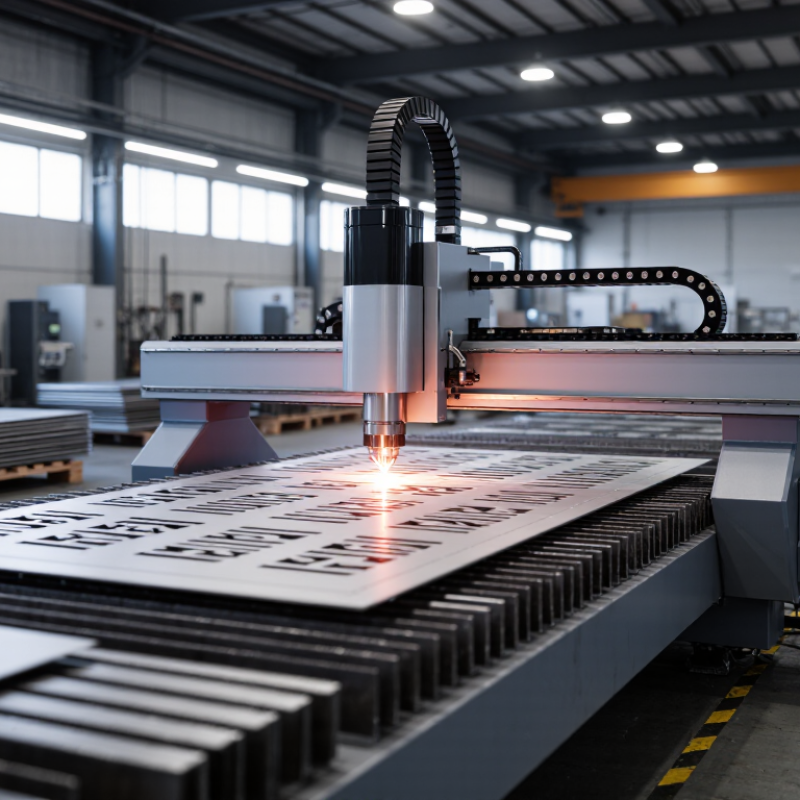
What Is the Best Laser CNC Machine for Metal from China?

Understanding Laser CNC Machines for Metalworking

Choosing a laser CNC machine for metal begins with understanding how it cuts, moves, and controls heat. In practical metalworking, a fiber laser usually suits steel, stainless steel, aluminum, and brass. The correct power depends on thickness, production volume, and required edge quality. A 1.5 kW system may handle thin sheet efficiently, while thicker plate needs more energy and slower travel. Not always better. Higher wattage can increase cost, reflection risks, and operating demands.

Mechanical accuracy matters as much as laser power. Inspect the frame, linear guides, drive system, and table flatness before purchase. A rigid bed reduces vibration around corners and small holes. The cutting head should maintain stable focus above uneven metal. Automatic height sensing helps, but it still needs regular calibration. A common workshop problem involves a dirty protective lens causing rough edges within hours. The fault may look like poor material quality at first. Maintenance access and clear service procedures therefore deserve close attention.

When comparing Chinese equipment, evaluate documentation, factory testing, training, spare-part availability, and remote technical support. Ask for sample cuts using your actual metal grade and thickness. Check kerf width, burrs, hole roundness, and cycle time. Test the actual cut. Software compatibility also matters; awkward nesting can waste more sheet than expected. Enclosure safety, ventilation, electrical protection, and emergency stops should meet local requirements. Specifications can look impressive on paper. Real performance varies with gas purity, operator skill, and preventive care. Verify every claim before ordering.
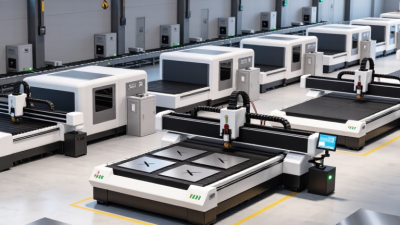
Key Features That Define a High-Quality Chinese Laser CNC Machine

A high-quality Chinese laser CNC machine begins with a rigid, vibration-controlled frame. This structure protects cutting accuracy during long production runs. Look for a fiber laser suited to your material thickness and daily workload. Thin stainless steel may need fast piercing, while mild steel demands stable power and gas control. According to Fortune Business Insights, the global laser cutting machine market was valued at about USD 6.8 billion in 2023. Its projected growth reflects rising demand for automated metal processing.

Precision depends on more than laser power. Check positioning accuracy, repeatability, servo response, and thermal compensation. A practical machine should produce clean edges with limited dross around small holes. The controller should support nesting, automatic height sensing, and clear error records. ISO 9001-based quality systems can improve traceability, but certification alone does not guarantee excellent cutting. Ask for test samples using your actual steel grade and thickness. No specification sheet is perfect. Real factory results matter more.

Tips: Inspect the bed welds, cable routing, lens protection, and emergency controls before purchase. Request cutting data, maintenance intervals, and operator training details. The International Organization for Standardization emphasizes risk control through machine safety standards, including ISO 12100. Also, leave time for parameter tuning. Even a powerful machine may struggle with reflective metals, unstable gas pressure, or poor material flatness.

What Is the Best Laser CNC Machine for Metal from China? - Key Features That Define a High-Quality Chinese Laser CNC Machine

Evaluation Dimension Entry-Level Configuration Production Configuration High-Performance Configuration What Indicates High Quality
Laser Type Continuous-wave fiber laser Continuous-wave fiber laser with stable beam delivery High-power fiber laser with active monitoring Stable output power, low beam loss, sealed optical path, and documented service intervals
Typical Laser Power 1–2 kW 3–6 kW 8–20 kW Power should match the required material, thickness, duty cycle, and operating cost rather than simply being maximized
Suitable Metals Carbon steel, stainless steel, aluminum, brass, and galvanized sheet The same materials, with improved capacity for thicker carbon and stainless steel The same materials, including demanding production work and thicker plate processing The machine specification should clearly state approved reflective-metal cutting procedures and limits
Common Sheet Thickness Range Approximately 0.5–12 mm, depending on metal type and cutting gas Approximately 0.5–25 mm, depending on power and process settings Approximately 1–50 mm for selected materials and production conditions Published cutting charts should identify material, thickness, gas, nozzle, speed, and expected edge quality
Working Area Approximately 1,500 × 3,000 mm Approximately 1,500 × 3,000 mm or 2,000 × 4,000 mm Approximately 2,000 × 6,000 mm or larger The bed should support the intended sheet size while maintaining alignment and accessibility for loading
Positioning Accuracy Typically up to ±0.05 mm per meter Typically up to ±0.03 mm per meter Typically up to ±0.02 mm per meter under controlled conditions Accuracy figures should be supported by inspection procedures and measured under a defined standard
Maximum Rapid Travel Approximately 80–120 m/min Approximately 100–140 m/min Approximately 120–180 m/min High travel speed is useful only when acceleration, vibration control, and corner accuracy remain stable
Drive and Motion System Rack-and-pinion drive with servo motors Precision rack-and-pinion drive with calibrated servo control Dual-drive gantry with high-response servo motors and automatic compensation Rigid gantry, low backlash, accurate homing, and repeatable motion after extended operation
Cutting Head Automatic focus head with basic height sensing Automatic focus head with capacitive height control and nozzle monitoring High-power cutting head with collision protection, temperature monitoring, and automatic focus Reliable height control, replaceable protective windows, collision recovery, and readily available consumables
Assist Gas Compressed air, oxygen, or nitrogen Oxygen and nitrogen with regulated pressure control High-pressure nitrogen and oxygen systems with multi-stage regulation Stable gas pressure, suitable filtration, correctly sized piping, and clearly documented consumption requirements
Control and Software 2D CAD/CAM nesting and standard parameter library Automatic nesting, remnant management, lead-in optimization, and production reporting Advanced nesting, remote diagnostics, process monitoring, and production data integration Simple operator workflow, editable parameters, reliable file import, and regular software updates
Machine Structure Welded steel bed with basic stress relief Stress-relieved welded bed with reinforced cross members Heavy-duty bed designed for high-power cutting and long production cycles Low deformation, verified flatness, durable slats, and effective smoke and heat management
Cooling System Industrial water chiller with temperature alarm Dual-temperature chiller for laser source and cutting head High-capacity chiller with flow, pressure, and temperature monitoring Stable cooling performance, automatic alarms, suitable ambient-temperature range, and easy filter maintenance
Safety Features Emergency stops, electrical protection, and guarded operating area Interlocked enclosure, warning indicators, emergency stops, and fume extraction Fully enclosed Class 1 operating area, door interlocks, safety relay, and monitored extraction Safety design should comply with applicable local regulations and include documented risk-control procedures
Automation Options Manual loading and unloading Pallet changer or semi-automatic loading system Automatic loading, unloading, sorting, and storage integration Automation should reduce handling time without limiting maintenance access or operator safety
Electrical Supply Usually three-phase industrial power; exact rating depends on configuration Three-phase industrial power with increased chiller and extraction requirements Higher-capacity three-phase supply with engineered power distribution The supplier should provide total connected load, recommended breaker size, grounding requirements, and voltage options
Maintenance Requirements Daily cleaning, nozzle inspection, lens-window checks, and routine lubrication The same tasks plus calibration checks and cooling-system maintenance Scheduled preventive maintenance, optical inspection, gas-system checks, and diagnostic logging Clear maintenance schedules, accessible service points, spare-parts availability, and troubleshooting documentation
Best Use Case Prototyping, light fabrication, repair work, and small workshops General fabrication, custom parts, architectural metalwork, and regular batch production High-volume fabrication, thick-plate processing, contract cutting, and automated production lines The best machine is the one that meets required thickness, throughput, accuracy, safety, service, and total operating-cost targets

Note: Performance ranges are typical industry values. Actual results vary with laser power, material grade, sheet thickness, assist gas, nozzle condition, cutting parameters, machine calibration, and operating environment.

Comparing Fiber, CO₂, and Other Laser Types for Metal Cutting

For most metal-cutting applications, fiber lasers are the strongest choice from China. MarketsandMarkets’ Laser Cutting Machine Market report identifies fiber systems as the leading segment, driven by efficiency, speed, and lower maintenance. A typical 2 kW fiber source can cut carbon steel, stainless steel, and aluminum efficiently. Its beam travels through a sealed optical path, so alignment problems are less common. In a workshop, this means fewer interruptions around the cutting head. Less drama.

CO₂ lasers still deserve attention. They can produce smooth cuts on thicker mild steel and handle some non-metal materials, but their mirrors, gas systems, and alignment require more care. Fraunhofer ILT technical comparisons generally place fiber wall-plug efficiency near 30% to 40%, while CO₂ systems often remain around 10% to 15%. Those figures vary with power and operating conditions. Nd:YAG, disk, and diode lasers serve narrower needs, including reflective metals or specialized heat-control work. They are not automatically better.

I would not choose by wattage alone. A machine with unstable motion, weak fume extraction, or poor nesting software can waste expensive laser power. Test actual samples before ordering. Check edge roughness, piercing time, kerf width, and dross at production speed. ISO 11553 safety requirements, electrical documentation, spare-parts access, and technician response also matter. Grand View Research’s laser cutting market analysis highlights automation as a major growth factor, yet automation only helps when calibration is reliable. My own judgment can still be wrong on unfamiliar alloys, so trial data should outrank sales claims.

How to Choose the Best Chinese Laser CNC Machine for Your Needs

Choosing the best Chinese laser CNC machine for metal starts with your actual workload. A workshop cutting thin stainless steel needs different equipment from a factory processing thick carbon steel daily. Define the material, thickness, sheet size, and expected cutting hours before comparing prices. I recommend testing your own drawings on sample metal. A clean edge on one sheet proves little. Ask for repeated cuts, small holes, sharp corners, and long straight lines.

Fiber laser systems usually suit metal production because they cut quickly and require limited routine maintenance. Power still needs careful selection. More power is not always better. It can increase purchase costs, energy use, and heat-related distortion. Check the machine’s positioning accuracy, cutting tolerance, bed stability, and motion system. Inspect photographs of the cutting head, electrical cabinet, cable protection, and exhaust path. These details often reveal build quality better than polished sales language.

Reliable support matters as much as the machine itself. Request manuals, wiring diagrams, installation guidance, and operator training in clear English. Confirm spare-part availability, remote diagnostics, response times, and warranty conditions in writing. Ask whether technicians have experience with your metal grades and software workflow. A machine may look impressive during a demonstration, yet perform differently in a dusty workshop. I have seen buyers focus too heavily on maximum speed. That choice can disappoint when accuracy, service, or daily uptime matters more. Leave room for doubt, and verify every important claim with documented tests.

Evaluating Power, Precision, Safety, Service, and Total Cost

What Is the Best Laser CNC Machine for Metal from China?

Power should match the metal, thickness, and cutting speed you actually need. Higher wattage is not automatically better. It can increase purchase price, energy use, and maintenance demands. Ask for test cuts using your own stainless steel or mild steel samples. Measure edge taper, burrs, heat marks, and cycle time. A stable motion system, accurate focusing, and repeatable positioning often matter more than impressive power figures.

Safety requires more than a warning label. Look for a fully enclosed cutting area, reliable interlocks, emergency stops, beam protection, and suitable fume extraction. Confirm electrical documentation and installation requirements before shipment. I once underestimated ventilation costs on a workshop project. That mistake delayed production and changed the real budget. Check whether the machine supports the safety rules in your location.

Service can determine whether a machine earns money or sits idle. Request response times, spare-part availability, remote diagnostics, and operator training in writing. Ask for documented accuracy tests, inspection records, and acceptance criteria. Calculate the total cost, including shipping, import charges, installation, consumables, lenses, nozzles, software, electricity, and downtime. A cheaper machine may become expensive after repeated alignment problems. A higher-priced system may be reasonable, but only when its performance is independently verified.