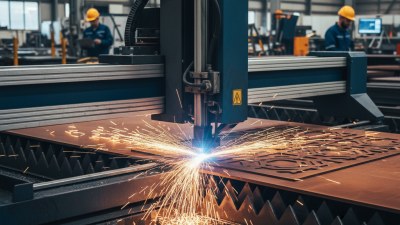
Metal fabrication is becoming more accessible to serious makers, small workshops, and technically skilled homeowners. Industry reports reflect this change. Grand View Research describes steady global growth in the laser cutting machine market, driven by automation, compact equipment, and demand for flexible production. MarketsandMarkets also forecasts continued expansion, although published estimates differ by region, machine category, and reporting year. The numbers vary. That difference deserves attention.
This guide examines the Top 10 Types of Metal Laser Cutting Machines for Home. It compares fiber, CO₂, diode, portable, enclosed, and desktop-oriented systems. Each type has different limits. Cutting thickness, laser power, work area, cooling, electrical load, and maintenance costs can change the buying decision. A small stainless-steel bracket may need a different setup than a large aluminum panel. Practical experience matters here, because a machine that looks compact online may still require strong ventilation, stable flooring, dedicated power, and safe material handling.
Safety remains central to any home installation. ISO 11553-1 provides recognized safety principles for laser processing machines, while OSHA guidance highlights hazards involving radiation, fumes, fire, electricity, and moving parts. A Metal Laser Cutting Machine For Home should therefore include suitable guarding, interlocks, extraction, emergency controls, and clear operating procedures. Safety comes first. Not every model suits every garage. Some specifications are also difficult to compare honestly across manufacturers. This overview offers a structured starting point, while encouraging readers to verify certifications, local requirements, service support, and real cutting tests before purchase.
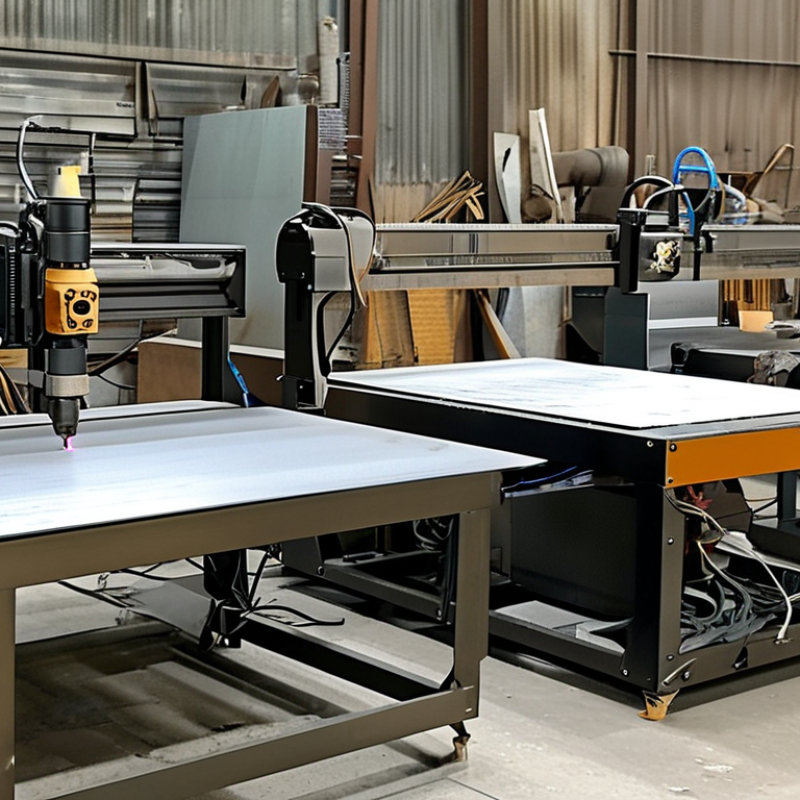
Metal laser cutting technologies for home workshops must balance cutting power, footprint, noise, fumes, and maintenance. A compact fiber laser is usually the most practical option for thin stainless steel, mild steel, and aluminum. Power levels around 20 to 50 watts suit light fabrication and detailed parts. Enclosed desktop systems add valuable protection and reduce stray reflections. They also make alignment easier for beginners.
Other useful types include pulsed fiber lasers, air-cooled fiber machines, small CNC gantry cutters, tube-cutting attachments, and compact sheet-metal systems. A three-in-one machine may cut, mark, and engrave, but its flexibility can reduce cutting speed. CO2 lasers can work with painted or coated metal, although they rarely cut bare steel efficiently. Diode lasers are better for wood, leather, or coated surfaces. They are not reliable choices for direct metal cutting.
In a home workshop, ventilation is not optional. A sealed enclosure, suitable filtration, and a clean air supply help control smoke and fine particles. Keep the machine on a rigid table, away from curtains, solvents, and damp floors. I once underestimated how quickly metal dust could cover a workbench. That mistake changed my cleaning routine. Check the lens, nozzle, grounding, and assist-gas pressure before each session. Thin sheet can still warp, reflect light, or develop rough edges. The advertised maximum thickness may not match real household conditions. Test scraps first, record the settings, and inspect every cut before trusting a finished part.
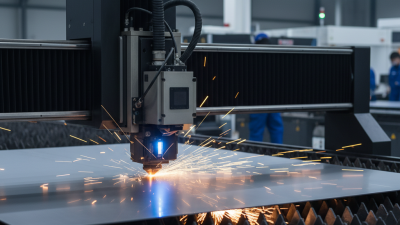
Home metal laser cutting machines usually use fiber lasers because their wavelength suits steel, stainless steel, and aluminum. The ten common types are desktop fiber cutters, enclosed desktop cutters, open-frame fiber cutters, portable fiber cutters, pulsed fiber cutters, continuous-wave fiber cutters, air-cooled fiber cutters, water-cooled fiber cutters, tube-and-sheet cutters, and fume-filtered fiber cutters. These categories can overlap. A small pulsed unit may mark metal well but cut only thin foil. A continuous-wave machine handles thicker sheet, yet it needs more power, space, and careful heat management. Open-frame models offer easier access, while enclosed machines better control sparks and fumes.
A practical home setup should include a stable metal table, proper grounding, a guarded cutting area, and suitable assist gas. Mild steel may create sharp burrs, even when the edge looks clean from above. Aluminum reflects energy and can damage poorly protected optics. Test coupons help measure kerf width, warping, and piercing time before valuable work begins. Use calipers, not visual guesses.
An air-cooled system may be convenient, but long cutting sessions can expose its limits. Water-cooled systems are steadier, although leaks and maintenance become real concerns.
Local electrical, fire, ventilation, and laser-safety rules still apply. I would not treat a low price as proof of suitability; my first comparison would be imperfect, because material thickness, gas pressure, and lens condition can change results.
Keep flammable items away. Never leave the machine unattended.
Top 10 Types of Metal Laser Cutting Machines for Home
Home metal cutting machines differ sharply in power, laser source, and workable thickness. Diode lasers, usually rated from 10 to 40 watts, may mark coated metal but rarely cut bare steel. Fiber lasers use far higher optical intensity. Compact 20–50 watt units can mark stainless steel, while true sheet cutting often needs hundreds or thousands of watts. CO2 lasers remain useful for nonmetal materials, but their longer wavelength performs poorly on reflective metals.
Power is not the only measure. A 1,000-watt fiber source can cut thin mild steel quickly, yet its capacity depends on gas pressure, lens quality, focus accuracy, and motion control. For home workshops, a small pulsed fiber machine may handle engraving and thin metal work with lower heat distortion. A continuous-wave system offers stronger cutting performance, but demands more space, extraction, cooling, and electrical planning. The numbers are not promises.
Grand View Research valued the global laser cutting machine market at about 6.8 billion dollars in 2023 and projected continued growth through 2030. MarketsandMarkets also identifies fiber technology as a major growth segment because of efficiency and maintenance advantages. These reports describe industrial markets, not kitchen-table machines. That distinction matters. Cutting capacity should be verified using real test charts, not marketing labels. Even a modest 0.8-millimeter stainless-steel sheet can expose weaknesses in focus, assist gas, or frame rigidity. Some home models look capable. They are not always consistent.
| No. | Machine Type | Typical Laser Source | Typical Power Range | Typical Working Area | Practical Mild-Steel Capacity | Best-Suited Materials | Main Home-Use Advantage |
|---|---|---|---|---|---|---|---|
| 1 | Compact Fiber Laser Engraver | Continuous-wave fiber laser | 20–30 W | Approximately 100 × 100 to 200 × 200 mm | Primarily surface marking; not intended for routine sheet cutting | Stainless steel, aluminum, brass, copper, coated metals | Small footprint and low operating cost for identification, engraving, and dark marking |
| 2 | Entry-Level Pulsed Fiber Laser Cutter | Nanosecond pulsed fiber laser | 50–100 W | Approximately 100 × 100 to 300 × 300 mm | Thin foils and very thin sheet, generally below 0.5 mm | Stainless steel, titanium, aluminum, copper, thin metal shims | Very small heat-affected area and precise work on thin parts |
| 3 | Desktop 500 W Fiber Sheet Cutter | Continuous-wave fiber laser | 300–500 W | Approximately 600 × 600 to 900 × 600 mm | About 1–2 mm, depending on assist gas and material grade | Thin mild steel, stainless steel, aluminum, galvanized sheet | Compact format for hobby workshops needing genuine thin-sheet cutting |
| 4 | Desktop 1 kW Fiber Laser Cutter | Continuous-wave fiber laser | 800–1,000 W | Approximately 900 × 600 to 1,300 × 900 mm | About 2–4 mm for mild steel under suitable cutting conditions | Mild steel, stainless steel, aluminum, brass, galvanized sheet | Good balance between home-scale size, speed, and material versatility |
| 5 | Enclosed 1.5 kW Fiber Laser Cutter | Continuous-wave fiber laser | 1,500 W | Approximately 1,300 × 900 to 1,500 × 1,000 mm | About 4–6 mm for mild steel; thinner limits apply to reflective metals | Mild steel, stainless steel, aluminum, brass, copper | Enclosure improves fume control and shields the operator from direct laser radiation |
| 6 | Compact 2 kW Fiber Laser Cutter | Continuous-wave fiber laser | 2,000 W | Approximately 1,500 × 1,000 to 1,500 × 3,000 mm | About 6–8 mm for mild steel; approximately 3–5 mm for stainless steel | Mild steel, stainless steel, aluminum, brass, copper | Faster production and greater thickness capacity while remaining smaller than industrial-format machines |
| 7 | Small-Format CO2 Laser Cutter | Sealed or glass-tube CO2 laser | 40–150 W | Approximately 300 × 200 to 900 × 600 mm | Usually unsuitable for bare reflective metals; coated or painted thin metal may be marked or cut with limitations | Non-metals such as wood, acrylic, leather, paper, and some coated metals | Useful for mixed-material home workshops, although it is not a general-purpose bare-metal cutter |
| 8 | Blue Diode Laser Cutter with Metal Marking Capability | Visible blue diode laser | 5–20 W optical output | Approximately 400 × 400 to 800 × 800 mm | Normally not suitable for cutting bare metal; may mark anodized, painted, or coated surfaces | Wood, leather, acrylic, anodized aluminum, painted metal | Lower purchase cost and simple operation for light fabrication and surface marking |
| 9 | Tube-and-Sheet Fiber Laser Cutter | Continuous-wave fiber laser | 1,000–3,000 W | Sheet area around 1,500 × 3,000 mm; tube lengths commonly up to 3,000 mm | Approximately 4–10 mm for mild steel, depending on power and configuration | Sheet metal, square tube, rectangular tube, round tube, stainless steel, aluminum | One machine handles both flat sheet and structural tubing, saving workshop floor space |
| 10 | Air-Cooled Portable Fiber Laser Cutter | Air-cooled continuous-wave fiber laser | 1,000–2,000 W | Approximately 600 × 600 to 1,500 × 3,000 mm | About 3–8 mm for mild steel, depending on power, nozzle, and assist gas | Mild steel, stainless steel, aluminum, brass, thin copper | Reduced chiller requirements and easier installation than many water-cooled systems |
Top 10 Types of Metal Laser Cutting Machines for Home
Choosing among fiber, CO2, diode, enclosed desktop, portable, CNC, air-cooled, water-cooled, single-mode, and dual-mode machines requires more than power ratings. Space and safety often matter more. IEC 60825-1 classifies laser hazards by accessible radiation, so a fully enclosed machine with a working interlock is preferable for home use. The enclosure should sit on a stable, non-combustible surface, away from curtains, solvents, and children. It needs practical access for loading sheets.
Metal choice also changes the risk. Mild steel and stainless steel are common starting materials. Aluminum reflects more laser energy and may demand careful settings. Galvanized or coated sheets can release hazardous fumes when heated. The U.S. National Institute for Occupational Safety and Health recommends local exhaust ventilation for airborne contaminants, while the OSHA Technical Manual identifies metal fumes and particulates as key cutting hazards. A basic room fan is not enough. Use filtered extraction that vents safely outdoors, where permitted.
Operating requirements are easy to underestimate. Check circuit capacity, grounding, cooling, assist-gas supply, and emergency-stop access before installation. Keep a suitable fire extinguisher nearby, but never leave an active cut unattended. The National Fire Protection Association’s NFPA 79 provides useful guidance for industrial machinery electrical systems, although home installations still need qualified inspection. I would not trust “home safe” as a complete safety claim. It is only a starting point. Even experienced users can miss reflected light, delayed ignition, or clogged filters.
Choosing the right metal laser cutter for home use starts with your actual projects. Measure your usual sheet thickness, not your future ambitions. A compact fiber laser suits steel, stainless steel, and aluminum better than most hobby machines. CO2 and diode systems may struggle with bare metal or require additional equipment. Check the manufacturer’s tested cutting range before trusting advertised power.
I once focused too much on wattage and ignored the working area. That mistake wasted material and limited larger projects. A smaller machine can be practical, but its bed must hold your common sheet sizes. Confirm electrical requirements, ventilation, noise levels, and floor strength. Home workshops often have limited circuits, and laser systems can produce smoke, sparks, and fine particles. An enclosed design, suitable extraction, and fire-resistant surroundings are essential.
Look closely at motion accuracy and replacement parts. Test cuts should show clean edges, consistent kerfs, and minimal discoloration. Ask whether the machine supports reliable height sensing and emergency stopping. Software matters too; complicated controls can create avoidable errors. Keep a record of settings for each metal thickness. Even experienced users sometimes misjudge reflective surfaces or overheated material. Leave enough space for maintenance and safe loading, rather than filling every corner of the workshop.
The chart compares representative laser power levels for common desktop and compact metal laser systems. Higher power generally supports faster cutting and thicker mild-steel sheets, while diode, CO₂, and low-power fiber systems are mainly used for metal marking rather than cutting bare metal.
For home use, enclosed low-power systems are easier to install and operate, but true metal cutting usually requires a fiber laser with assist gas, ventilation, stable electrical service, and suitable safety protection. Actual results depend on metal type, thickness, focal optics, cutting speed, gas pressure, and machine design.