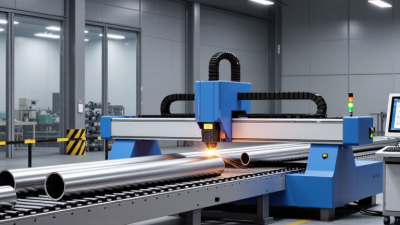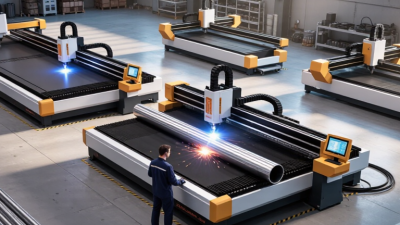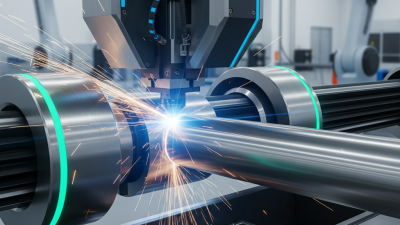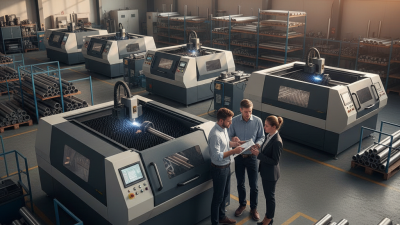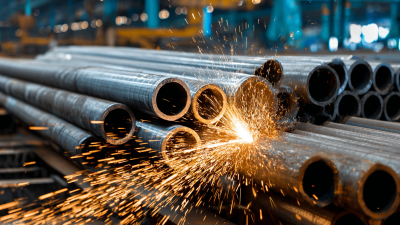
Choosing the right Tube Laser Cutting Machine is not a simple matter of comparing wattage or purchase price. Tube geometry, material thickness, cutting speed, automation, and production volume all influence the final decision. A compact workshop may need a flexible three-chuck machine, while an automotive supplier may require automated loading, unloading, and high-speed fiber processing.
Dr. John F. Ready, a respected laser-processing author, emphasized the importance of matching equipment to the application: “A laser is a tool, not a complete process.” That principle remains relevant. Even a powerful source can produce poor results when clamping, focus control, gas delivery, or software settings are neglected.
This guide examines the top 10 types of Tube Laser Cutting Machine systems used in modern fabrication. It considers fiber, CO2, open-bed, enclosed, rotary-chuck, and fully automated designs. Each type has practical strengths. Each also has limits. Some machines deliver excellent edge quality but demand higher maintenance. Others reduce labor but require more floor space and operator training.
The differences become visible on the factory floor. A thin stainless-steel tube may cut cleanly in seconds, while a thick structural beam needs slower movement and careful heat management. Small errors can create burrs, distortion, or misaligned holes. That matters.
The following outline focuses on real production needs, not impressive specifications alone. It also recognizes an uncomfortable truth: no single machine suits every manufacturer. The best choice depends on materials, tube profiles, tolerances, budget, and future capacity. Decisions should be tested against actual samples whenever possible.
What Are the Top 10 Types of Tube Laser Cutting Machines?
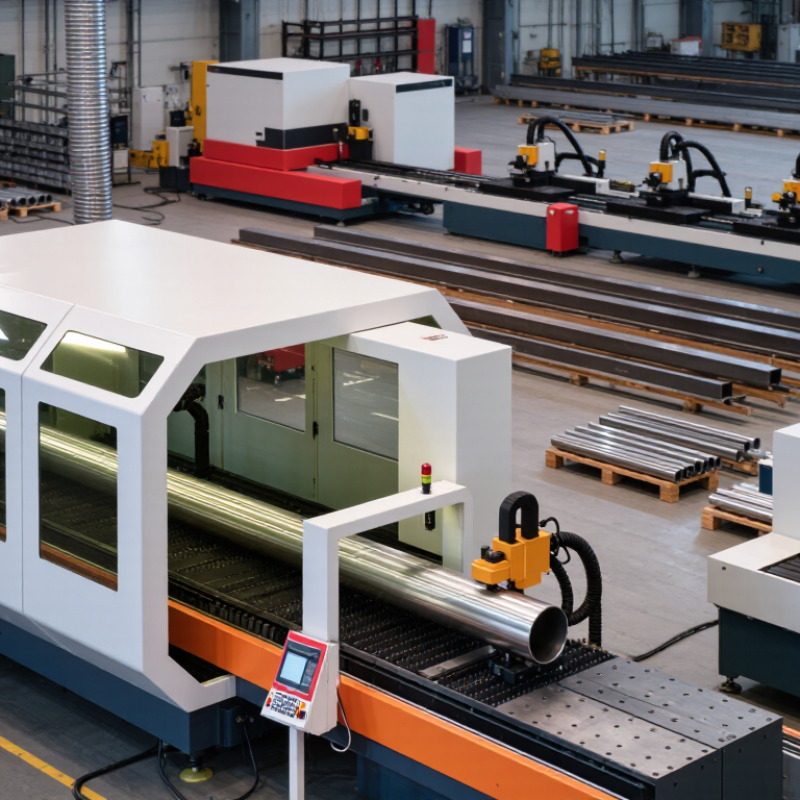
Tube laser cutting machines are classified by structure, motion, laser source, and production role. The ten common types are single-chuck, dual-chuck, three-chuck, four-chuck, fiber-laser, CO2-laser, three-axis, five-axis, automatic-loading, and hybrid machines. This list is practical, not absolute. Some machines fit several categories at once.
A single-chuck machine suits short tubes and simpler profiles. Dual-chuck designs reduce deflection during long cuts. Three- and four-chuck systems improve grip on heavy or thin-wall sections. Three-axis machines handle basic holes and cross-cuts. Five-axis models reach angled surfaces, bevels, and complex joints. Fiber sources usually cut metal efficiently with lower routine maintenance. CO2 systems can still suit particular materials and thickness ranges, although selection requires careful testing. Small differences matter.
Automatic-loading machines connect cutting with storage, measuring, and unloading. They support steady production and reduce manual handling around sharp tube ends. Hybrid machines combine tube cutting with plate cutting, saving floor space for mixed workloads. In practice, classification should follow the job, not the brochure. Check tube diameter, wall thickness, profile shape, chuck clearance, kerf quality, and tolerance stability. A bright edge is not enough. Ask for sample cuts from your actual material and length. The boundaries are not always clean, and advanced equipment can disappoint when loading accuracy or nesting software is neglected. Careful trials expose weaknesses before installation.
| No. | Machine Type | Main Classification Basis | Tube or Profile Capability | Typical Laser Source | Key Motion or Cutting Features | Common Materials | Typical Applications | Main Advantages | Important Limitations |
|---|---|---|---|---|---|---|---|---|---|
| 1 | Rotary-Chuck Tube Laser Cutting Machine | Classified by the use of a rotary chuck that turns the workpiece during cutting. | Round, square, rectangular, oval, and selected open or irregular profiles, depending on the chuck design. | Fiber laser, commonly selected for metal tube processing. | Linear axes move the cutting head while the chuck rotates the tube around its longitudinal axis. | Mild steel, stainless steel, aluminum, brass, and galvanized steel. | Frames, railings, furniture components, lighting parts, and structural sections. | Efficient for continuous tube cutting and suitable for many standard profiles. | Very thin, flexible, or highly irregular profiles may require special supports and customized clamping. |
| 2 | Four-Axis Tube Laser Cutting Machine | Classified by the number of controlled axes used for synchronized tube cutting. | Primarily round, square, rectangular, and other regularly shaped hollow sections. | Fiber laser. | Typically combines X, Y, Z, and rotary motion to cut around the complete circumference of a tube. | Carbon steel, stainless steel, aluminum, copper alloys, and galvanized steel. | Hole cutting, slots, end trimming, notches, and intersecting tube joints. | Provides coordinated rotary cutting with a relatively straightforward machine structure. | Limited angular cutting compared with machines equipped with a multi-axis bevel or 3D cutting head. |
| 3 | Five-Axis 3D Tube Laser Cutting Machine | Classified by the addition of two angular cutting movements to standard linear and rotary axes. | Round and shaped profiles requiring angled holes, bevels, compound cuts, or three-dimensional contours. | Fiber laser. | Uses synchronized linear, rotary, and tilting movements for non-perpendicular and spatial cuts. | Steel, stainless steel, aluminum, and other laser-cuttable metals. | Automotive components, complex frames, construction joints, and precision assemblies. | Produces complex cuts and bevels that can reduce secondary machining. | Higher purchase cost, programming complexity, and maintenance requirements. |
| 4 | Flatbed-and-Tube Combination Laser Machine | Classified by combining a flat-sheet cutting table with a tube rotary attachment or tube axis. | Flat sheets plus round, square, rectangular, and selected profile tubes. | Fiber laser. | Switches between sheet cutting and tube cutting by using a rotary device or integrated tube-processing module. | Mild steel, stainless steel, aluminum, brass, and galvanized sheet or tube. | Job shops and manufacturers processing both plate and tubular components. | One machine can cover two major cutting tasks and improve floor-space utilization. | May have lower tube productivity or tube diameter capacity than a dedicated tube machine. |
| 5 | Fully Enclosed Tube Laser Cutting Machine | Classified by the protective enclosure surrounding the cutting zone. | Usually standard metal tubes and profiles within the machine's specified diameter and length range. | Fiber laser. | Enclosed cutting area, interlocked access doors, fume extraction, and integrated chip or slag management. | Carbon steel, stainless steel, aluminum, and other compatible metals. | Production workshops, educational facilities, and environments with strict safety requirements. | Improves operator protection from laser radiation, sparks, fumes, and flying particles. | Requires more floor space and may involve greater initial cost than an open-frame design. |
| 6 | Open-Frame Tube Laser Cutting Machine | Classified by its accessible or partially open cutting structure. | Common tube and profile sizes supported by the rotary chuck and guide system. | Fiber laser. | Open loading area with a rotary fixture, manual or semi-automatic clamping, and visible workpiece access. | Mild steel, stainless steel, aluminum, and other suitable metals. | Prototyping, small-batch production, maintenance work, and workshops with frequent material changes. | Convenient loading, easy access, and often a lower machine cost. | Requires carefully controlled access, guarding, interlocks, and appropriate laser-safety procedures. |
| 7 | Automatic Loading and Unloading Tube Laser Machine | Classified by the level of material-handling automation. | Bundled or individually supplied tubes and profiles within the loader's size and weight limits. | Fiber laser. | Uses storage racks, loading arms, measuring systems, automatic clamping, and finished-part unloading. | Carbon steel, stainless steel, aluminum, and galvanized steel. | High-volume production of frames, furniture parts, automotive components, and structural profiles. | Reduces manual handling, improves repeatability, and supports longer unattended production periods. | Needs consistent raw-material quality, additional floor space, and higher investment. |
| 8 | High-Power Tube Laser Cutting Machine | Classified by laser output selected for greater thickness, speed, or productivity. | Medium-to-large metal tubes and profiles, subject to the source power, optics, and machine structure. | High-power fiber laser. | Rigid bed, high-capacity rotary chuck, enhanced cooling, and process settings designed for thicker sections. | Carbon steel, stainless steel, aluminum, and selected copper alloys. | Heavy equipment, construction machinery, steel structures, and industrial fabrication. | Can increase cutting speed or thickness capability when matched with suitable material and process settings. | Higher energy use and operating cost; excessive power is not necessarily beneficial for thin-wall tubes. |
| 9 | Small-Format Precision Tube Laser Machine | Classified by compact work envelope and emphasis on small-diameter or thin-wall components. | Small round tubes, miniature profiles, thin-wall sections, and precision components. | Low- to medium-power fiber laser. | Fine-focus optics, precise servo control, compact rotary chuck, and small kerf capability. | Stainless steel, aluminum, mild steel, brass, and other thin metal sections. | Medical equipment, electronics, lighting, laboratory equipment, and small furniture components. | Suitable for detailed features, small holes, and efficient use of limited workshop space. | Not intended for large diameters, very thick walls, or heavy structural profiles. |
| 10 | CO₂ Tube Laser Cutting Machine | Classified by the laser wavelength and source technology rather than by the tube-handling mechanism. | Metal tubes and profiles can be processed, although modern metal tube production commonly favors fiber technology. | CO₂ laser, typically operating at a wavelength of approximately 10.6 micrometers. | Uses a gas laser system, mirrors, focusing optics, and a rotary tube fixture. | Non-reflective metals such as mild steel and stainless steel; material compatibility depends strongly on system design. | Existing CO₂ laser facilities, selected fabrication work, and applications where the machine is already available. | Can deliver stable cutting performance on suitable materials and may use existing CO₂ equipment. | Generally lower electrical efficiency and more demanding beam-delivery maintenance than fiber systems for metal tube cutting. |