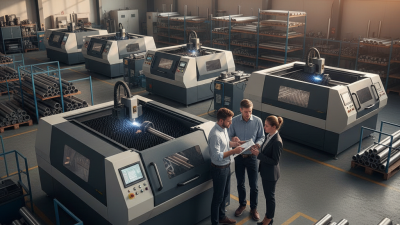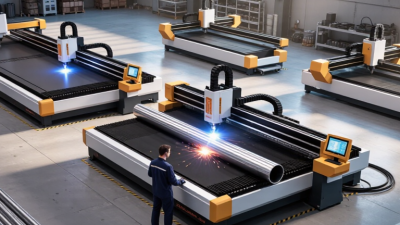
Demand for precise metal fabrication continues to shape investment in tube-processing equipment. Grand View Research estimated the global laser cutting machine market at USD 5.2 billion in 2023. Its report projected a 7.5% compound annual growth rate from 2024 to 2030. This figure covers laser cutting machines broadly, not pipe cutters alone. Still, it signals a growing market for automated cutting solutions.
For buyers comparing the 7 Best Laser Pipe Cutting Machines for Global Buyers, headline power is only part of the decision. A capable Laser Pipe Cutting Machine should handle the tube profiles and wall thicknesses your shop actually uses. Check chuck capacity, loading options, cutting accuracy, software compatibility, and access to local service. A clean cut matters. So does the time spent changing a fixture or finding a replacement part.
This guide compares machines through practical buying criteria, including productivity, material range, controls, safety features, and after-sales support. Specifications can look impressive on a brochure. Real performance may vary with material, setup, and operator experience, so independent testing is not always straightforward. Treat any ranking as a starting point, then confirm sample cuts, warranty terms, and service response times with the supplier. A little skepticism helps.
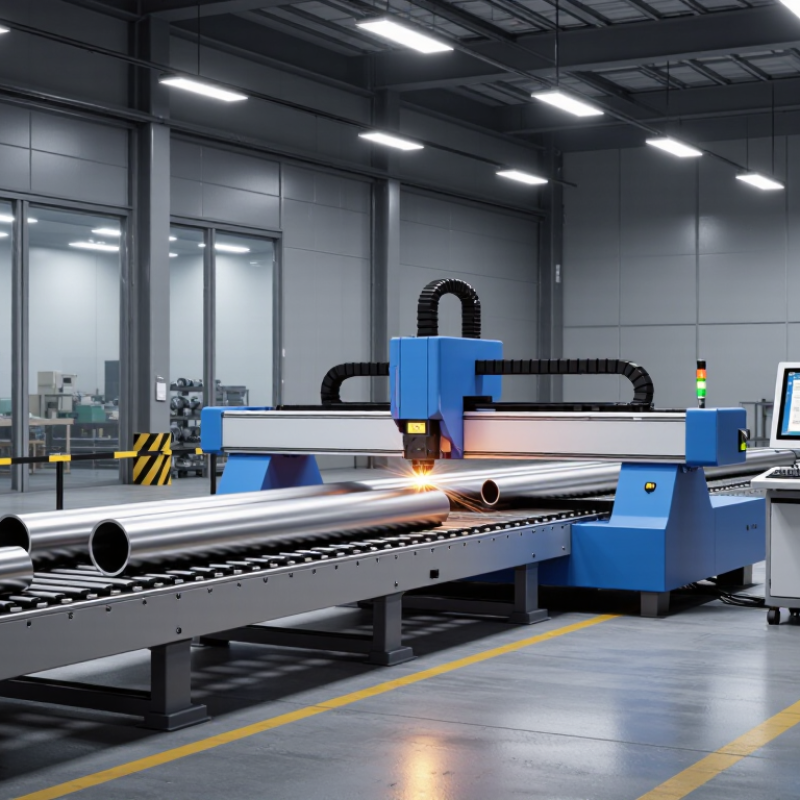
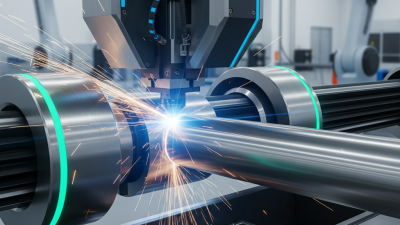
A laser pipe cutting machine combines a laser source, motion system, chuck, and computer-controlled cutting head. The operator enters a tube profile and cutting plan; rollers or a chuck hold and rotate the workpiece. As the beam focuses on the metal, concentrated heat melts or vaporizes a narrow path. Assist gas clears molten material, helping create a cleaner edge.
Small detail, big effect.
The cutting head follows programmed coordinates while the tube turns, making it possible to cut holes, slots, and angled ends in one setup. For square or oval sections, suitable supports and sensors help maintain alignment, though setup still matters. A poorly centered tube can shift the cut, leaving uneven openings or burrs. Wall thickness, alloy, surface condition, and gas choice all affect speed and edge quality. A machine’s rated capacity does not guarantee the same result on every job. In practice, a test cut may still need adjustment. Check focus, nozzle condition, and chuck pressure between jobs; even good settings can drift.
A global comparison should begin with the actual tube mix, not headline cutting speed. Record the smallest and largest diameters, wall thicknesses, material grades, and expected daily shifts. A chuck that grips thin-wall stainless steel gently may struggle with heavy structural tube. Ask suppliers for sample cuts using your own drawings. Check edge quality, burrs, and dimensional repeatability—not just maximum speed. Small details matter.
Grand View Research’s 2024 Laser Cutting Machine Market report estimated the global market at USD 5.04 billion in 2023, with a projected 7.5% compound annual growth rate through 2030. That growth signals broad adoption, but does not prove a machine suits every factory. Compare installed power, gas consumption, extraction needs, and local service response times. A technically capable machine can still be a poor fit where spare parts take weeks to arrive. Ask for documented uptime and maintenance assumptions, then verify them with current users if possible.
Safety and electrical requirements also vary by installation. Review ISO 12100 risk assessment principles and IEC 60204-1 requirements with qualified local specialists; certification claims should match the machine configuration being purchased. Compare warranty coverage, operator training, software language options, and the cost of routine consumables. Some figures are hard to compare fairly. That is worth questioning. A carefully defined acceptance test can expose gaps between a brochure specification and real production.
| Machine Configuration | Typical Tube or Pipe Capacity | Common Laser Power Range | Typical Stock Length | Loading and Chuck Setup | Best-Fit Applications | Key Comparison Points |
|---|---|---|---|---|---|---|
| Compact small-tube cutter | Round tube: approximately 10–120 mm outside diameter; square tube: commonly up to about 100 mm | About 1–3 kW | Commonly 6 m; shorter stock may be supported | Manual or semi-automatic loading; usually a two-chuck arrangement | Furniture parts, fitness equipment, small frames, and light fabrication | Check minimum workable tube size, small-part support, changeover time, and whether the loading method suits the planned production volume. |
| General-purpose standard tube cutter | Round tube: approximately 20–220 mm outside diameter; square tube: commonly up to about 150 mm | About 1.5–6 kW | Commonly 6 m or 9 m | Two- or three-chuck options; manual, bundle, or automated loading depending on configuration | Job shops and mixed production of metal furniture, machinery components, and structural parts | Compare the stated capacity for round, square, and rectangular sections separately; confirm compatible chuck jaws and automatic loading limits. |
| High-power production tube cutter | Often approximately 20–350 mm outside diameter, depending on machine design | About 3–12 kW | Commonly 6 m or 9 m | Typically automated feeding with chuck configurations selected for the workpiece range | High-throughput cutting of medium- and larger-section steel tubes | Higher power does not by itself determine throughput. Compare material thickness limits, acceleration, piercing strategy, duty cycle, and extraction capacity. |
| Heavy-duty large-diameter pipe cutter | Designed for large sections; some configurations handle round pipe around 350–500 mm or more | About 6–20 kW, depending on the cutting requirement | Often 6–12 m, subject to the machine layout | Heavy-load supports and specialized feeding; chuck and support design are critical | Large structural pipe, construction components, and heavy fabrication | Verify maximum workpiece weight, diameter and wall-thickness limits, loading equipment, floor-space needs, and local transport constraints. |
| Three-chuck precision and short-remnant cutter | Commonly within small-to-medium tube ranges, often up to approximately 220 mm outside diameter | About 1.5–6 kW | Usually 6 m or 9 m stock | Three chucks support the tube at multiple points and can help reduce the uncut remnant in suitable production setups | Repeat production where material utilization and consistent handling matter | Ask for the minimum remnant under a clearly defined tube size and cutting sequence; results depend on chuck layout, part geometry, and process settings. |
| Bevel-cutting pipe laser system | Often small-to-medium or medium sections; capacity varies with the bevel head and machine design | About 3–12 kW | Commonly 6 m or 9 m | Specialized cutting head and workpiece positioning; automation options vary | Pipe joints and components requiring angled edges for welding preparation | Confirm supported bevel angles, cut quality on the intended material and wall thickness, programming workflow, and whether bevel cutting affects the usable work envelope. |
| Profile and open-section laser cutter | Configured for selected open or non-round sections, such as channels, angles, and custom profiles | About 1.5–6 kW in many general fabrication setups | Commonly 6 m; longer stock depends on support and feeding design | Profile-specific clamping and support are required; not every tube chuck handles open sections reliably | Architectural metalwork, equipment frames, and fabrication using non-standard sections | Test the exact profile dimensions and orientation. Check clamping stability, collision clearance, nesting software, and whether the machine supports the required section library. |
Comparison note: The figures above are indicative ranges for common machine configurations, not guaranteed specifications or a ranked product list. Actual capacity depends on the machine model, chuck and loading setup, material grade, wall thickness, and cutting process. Before purchase, request a written specification, sample cuts using your own material, local electrical and safety compliance details, service coverage, spare-parts availability, and total delivered cost.
For global buyers, the right machine depends on tube diameter, wall thickness, material, and production volume. Grand View Research valued the global laser cutting machine market at USD 5.3 billion in 2023 and projected 7.2% annual growth from 2024 to 2030. This signals wider adoption, but does not make every configuration suitable for every shop. Compare sample cuts, loading time, local service access, and the full installed cost.
A compact two-chuck machine fits smaller workshops and shorter runs.
A three-chuck model supports longer tubes with less sag.
Four-chuck systems can improve grip on long workpieces, though setup may take longer.
Heavy-duty machines handle larger diameters and thicker walls.
High-speed fiber models suit thin-wall stainless steel and carbon steel.
Bevel-cutting machines prepare angled edges for welding.
Automated loading lines reduce manual handling in high-volume production.
Small shops need restraint. More automation is not always better. Buyers should confirm the machine’s usable tube-length range, chuck capacity, cutting tolerance, and support for the exact material grades they process. Request a test cut using a representative tube, then inspect the edge for burrs and heat marks. Published speed figures can be optimistic; real output also depends on loading, part changes, and operator skill.
A useful comparison starts with cutting capacity, not headline laser power. Check the supported tube diameter, wall thickness, and maximum workpiece length against your actual orders. A machine built for small furniture tubes may struggle with thick structural sections. Conversely, oversized capacity can add cost and floor-space demands without improving daily output. Measure your most common profiles before comparing specifications.
Material range matters just as much. Carbon steel and stainless steel are common choices, while aluminum and copper require careful attention to reflectivity, power settings, and cutting speed. Ask suppliers for sample cuts using your own tube dimensions and material grades. Inspect the edges, corners, and pierce points. Small burrs can mean extra finishing time. Not always obvious.
Automation can change labor needs and production rhythm. Options such as automatic loading, bundle separation, and finished-part sorting help when jobs repeat in volume. For short runs and frequent design changes, simpler loading may be easier to manage. Setup matters. Compare chuck accuracy, software support, service access, and operator training alongside automation features. A fast machine is less useful when routine adjustments become difficult, and that trade-off deserves a practical shop-floor test.
A laser pipe cutter’s real cost includes more than its quoted price. Compare installation, operator training, replacement optics, assist gas, energy use, and planned maintenance over five years. Ask who responds when the machine stops: a local technician, or someone several time zones away? The U.S. Department of Energy’s Operations & Maintenance Best Practices Guide (2010) reports potential maintenance-cost reductions of 25–30% and downtime reductions of 35–45% from predictive maintenance across industrial settings. These are broad estimates, not guaranteed results for a particular cutter. Still, they show why service access and condition monitoring belong in ownership-cost comparisons. Small details matter.
Before ordering, request written service-response times, spare-parts lead times, and a clear warranty list. Check whether the supplier can support your tube dimensions, chuck setup, extraction needs, and software updates. For compliance, verify that the machine documentation matches requirements in its destination market; ask for applicable risk assessments and laser-safety documentation, including references to ISO 12100 and IEC 60825-1 where relevant. A certificate alone may not answer who handles commissioning or staff training. I would also price one year of routine consumables, even if the estimate feels imperfect. Buyers often underestimate small recurring costs, while overlooking the larger cost of a machine waiting idle.
Suggested evaluation weights for comparing seven machines. These are buyer-planning priorities, not measured manufacturer ratings or market statistics.
Compare documented service coverage, applicable safety and regulatory compliance, and total cost of ownership alongside cutting capacity and process performance. Adjust the weights to suit your materials, location, production volume, and local requirements.