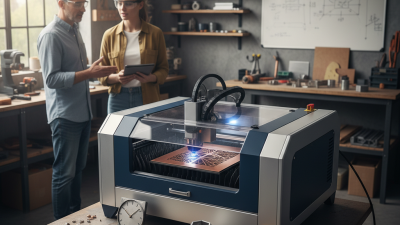
China’s steel-processing industry is entering a more demanding phase. According to Fortune Business Insights’ 2024 Laser Cutting Machine Market report, the global market was valued at approximately US$6.8 billion in 2023 and may exceed US$10 billion by 2030. Grand View Research also identifies automation, fiber-laser adoption, and manufacturing efficiency as major growth drivers. These trends explain why Chinese suppliers receive growing attention from fabricators, machinery distributors, and international production plants.
This guide examines the China Top 10 Steel Laser Cutter Manufacturers in 2026 through practical and verifiable criteria. The review considers laser source quality, cutting speed, bed dimensions, steel thickness capability, nesting software, safety systems, and after-sales support. A machine cutting 20 mm carbon steel is not automatically suitable for every factory. Stainless steel finish, assist-gas control, kerf consistency, and maintenance response matter just as much. ISO certifications and documented testing can support credibility, but they cannot replace real production evidence. Field performance tells more.
Rankings are never perfect.
Market reports often combine different machine categories, so their figures require careful interpretation. Manufacturer websites may also present ideal cutting results rather than continuous factory performance. Therefore, this overview balances published specifications with customer experience, technical documentation, installation capacity, and service reliability. Readers should still request sample cuts, inspect reference installations, and compare total ownership costs before purchasing a Steel Laser Cutter. The strongest supplier is not always the cheapest or the most visible. Sometimes, the less glamorous detail decides everything.
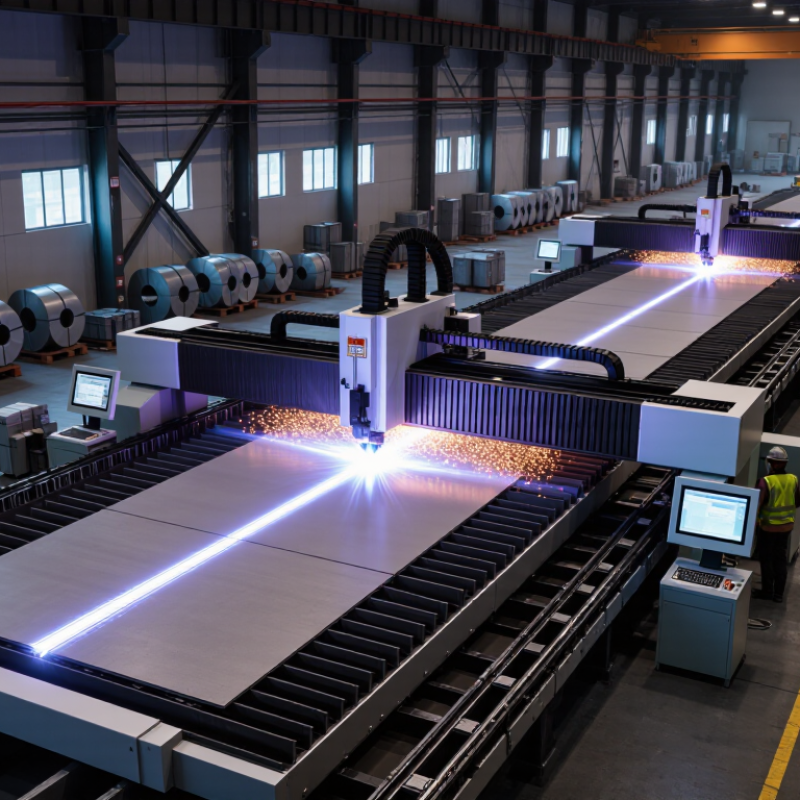
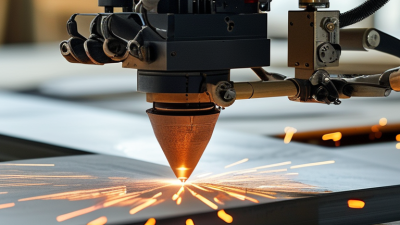
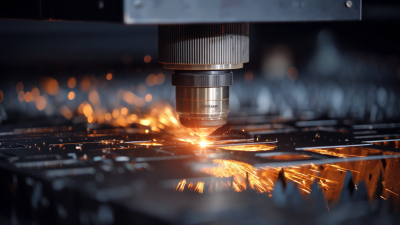
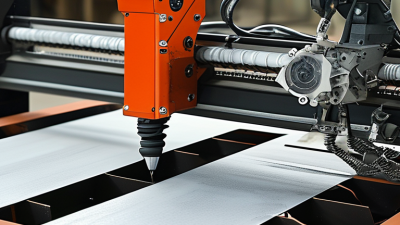
A steel laser cutter uses a focused beam to melt or vaporize sheet and plate metal. Assist gas removes molten material from the kerf. The result is a narrow cut, small heat-affected zone, and repeatable profiles. Fiber systems are widely used because they process reflective metals efficiently and require less routine maintenance than older laser types. However, performance depends on more than laser power.
Steel remains a massive industrial material. The World Steel Association reported global crude steel production of about 1.89 billion tonnes in 2023. Demand for faster fabrication continues to support equipment investment. Grand View Research estimates the global laser cutting machine market will grow strongly through 2030, driven by automation and metal-processing needs. These figures show opportunity, not guaranteed savings. A poorly matched machine can waste that opportunity through slow piercing, unstable gas control, or excessive dross.
Manufacturer choice matters because the machine becomes part of daily production. Check cutting samples on your actual steel grades, thicknesses, and finishes. Ask for measured accuracy, repeatability, uptime records, and service response times. ISO 12100 and IEC 60204-1 provide useful safety and electrical reference points. I would not trust a glossy brochure alone. Real factory testing matters more. A cheaper machine may look sensible, yet weak calibration support can create costly rework. Even experienced buyers sometimes overvalue wattage. That is a mistake worth questioning. Reliable training, spare-part access, software updates, and transparent warranty terms often decide long-term value.
Evaluating China’s top steel laser cutter manufacturers in 2026 requires more than comparing online prices. Ask each manufacturer for cutting samples using your actual steel grades, thicknesses, and preferred gases. Examine edge smoothness, heat-affected zones, piercing marks, and dimensional accuracy. A polished showroom sample proves little.
Review the machine’s laser source, cutting head, motion system, bed rigidity, and automatic height control. Request measured tolerances, repeatability data, duty-cycle information, and maintenance intervals. Strong manufacturers provide factory test records, electrical diagrams, safety documentation, and clear warranty terms. Check whether critical spare parts remain available after installation.
Factory verification matters. Inspect production areas, calibration tools, weld quality, and final testing procedures through a scheduled audit or independent inspection. Speak with established users in similar industries, not only selected references. Ask about installation time, operator training, response speed, and remote troubleshooting. Slow support becomes expensive.
Do not ignore software. Evaluate nesting functions, file compatibility, diagnostic alerts, and update policies. Confirm that the machine supports local safety requirements and responsible export documentation. Some suppliers promise extreme speeds that are difficult to sustain on thick steel. That deserves skepticism.
A lower purchase price may hide weak service, unstable consumables, or limited technical training. The best choice is rarely the fastest quote; it is the manufacturer that can repeatedly deliver accurate cuts under your real production conditions.
China’s steel laser cutter market continues to expand through automation, improved beam control, and smarter production software. The leading manufacturers are not judged by publicity alone. Their equipment should deliver stable cutting on carbon steel, stainless steel, and galvanized sheets. A reliable machine must also maintain accuracy during long production shifts.
This 2026 selection focuses on practical evidence. Important criteria include laser source stability, cutting speed, frame strength, software compatibility, and after-sales support. A factory visit can reveal details that brochures often hide. Watch the cutting head move across a thick steel plate. Listen for abnormal vibration. Check whether operators can replace lenses and nozzles without confusion.
Real experience matters.
Manufacturers with strong engineering teams usually provide sample testing, installation guidance, and operator training. They should explain kerf width, gas pressure, piercing time, and expected maintenance clearly. Service response also deserves attention, especially for factories running overnight schedules. Certification records and documented quality controls can improve confidence, but they do not guarantee perfect performance.
My own evaluation process is not flawless. Supplier data may vary between models, materials, and regional configurations. Buyers should request recent cutting samples, energy estimates, warranty terms, and references from comparable steel-processing facilities before making a decision.
China Top 10 Steel Laser Cutter Manufacturers 2026: Key Differences in Technology, Performance, and Service
China’s steel laser cutter market is expanding with broader fabrication demand. The World Steel Association reported about 1.88 billion tonnes of crude steel production in 2024. A 2024 MarketsandMarkets report also forecasts steady growth in the global laser cutting machine market. However, production volume alone does not identify the strongest manufacturer. Fiber source stability, beam quality, and cutting-head control matter more on the factory floor. A 20 mm carbon-steel plate should show a clean edge, limited dross, and consistent pierce points. Small details matter.
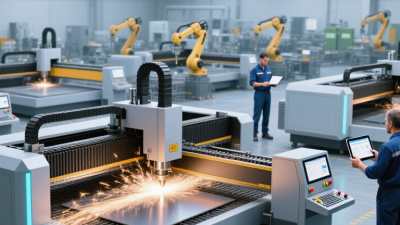
Technology differences appear in automation and software integration. Advanced systems combine nesting, nozzle monitoring, automatic focus, and real-time power adjustment. These features reduce scrap and operator intervention. Yet, claimed acceleration figures can mislead. Actual output depends on plate thickness, gas purity, pierce strategy, and loading time. Buyers should request tested samples from their own steel grades. Independent acceptance tests are more reliable than showroom demonstrations.
Performance should include uptime, kerf consistency, energy use, and maintenance access. Service quality is often the deciding factor. Ask about remote diagnostics, spare-part availability, response times, and technician training. ISO 9001 certification supports process control, but it does not guarantee excellent cutting results. In my view, many comparisons overlook installation accuracy and operator skill. That is a mistake. A well-calibrated mid-range machine can outperform a faster system with weak commissioning and delayed support.
Anonymous comparative benchmark of typical Chinese steel laser-cutting manufacturer capabilities
| Rank | Anonymous Manufacturer Profile | Primary Machine Focus | Typical Laser Power | Maximum Mild-Steel Thickness | Typical Working Area | Positioning Accuracy | Maximum Rapid Speed | Automation Level | Core Technology Difference | Typical Service Strength |
|---|---|---|---|---|---|---|---|---|---|---|
| 01 | Profile A — High-Volume Sheet Specialist | Fiber sheet laser cutters | 6–30 kW | 50–80 mm | 1,500 × 3,000 to 2,500 × 6,000 mm | ±0.05 mm | 100–140 m/min | Optional loading, unloading, and storage integration | High-power cutting with automated sheet handling | Strong commissioning and production-line integration |
| 02 | Profile B — Tube and Sheet Combination Builder | Sheet-and-tube laser systems | 3–12 kW | 30–40 mm | 1,500 × 3,000 mm plus 6,000–12,000 mm tube axis | ±0.05–0.08 mm | 80–120 m/min | Automatic chucking and profile recognition | One platform for structural tubing and flat plate | Flexible application engineering for mixed workloads |
| 03 | Profile C — Heavy-Plate Cutting Specialist | Heavy-duty fiber laser platforms | 12–30 kW | 80–100 mm | 2,000 × 6,000 to 3,000 × 12,000 mm | ±0.08 mm | 60–100 m/min | Semi-automatic loading and slag-removal options | Rigid gantry, high-duty transmission, and thick-plate piercing control | Process support for construction and heavy fabrication |
| 04 | Profile D — Precision Fabrication Supplier | Medium-power precision cutters | 1.5–6 kW | 20–30 mm | 1,500 × 3,000 to 2,000 × 4,000 mm | ±0.03–0.05 mm | 80–120 m/min | Automatic nesting and nozzle calibration | Fine kerf control for thin and medium-gauge steel | Emphasis on repeatability, training, and process documentation |
| 05 | Profile E — Entry-Level Industrial Manufacturer | Standard enclosed sheet cutters | 1.5–3 kW | 16–20 mm | 1,500 × 3,000 mm | ±0.05–0.08 mm | 60–100 m/min | Manual loading with basic automatic focusing | Lower capital cost and simplified maintenance | Suitable for standard applications and local technical support |
| 06 | Profile F — Automated Factory-Line Integrator | Laser cutting cells and automated lines | 6–20 kW | 40–60 mm | 1,500 × 3,000 to 2,000 × 6,000 mm | ±0.05 mm | 100–140 m/min | High: pallet changers, towers, conveyors, and MES interfaces | Reduced operator handling and improved machine utilization | Strong layout design, integration, and remote diagnostics |
| 07 | Profile G — Compact Workshop Equipment Builder | Compact open or enclosed cutters | 1–3 kW | 12–20 mm | 1,300 × 2,500 to 1,500 × 3,000 mm | ±0.08 mm | 60–100 m/min | Basic autofocus and optional rotary attachment | Space-efficient design for small and medium workshops | Simple operation, quick installation, and accessible spare parts |
| 08 | Profile H — Multi-Process Metalworking Supplier | Cutting, welding, and cleaning platforms | 1.5–6 kW | 25–30 mm | 1,500 × 3,000 to 2,000 × 4,000 mm | ±0.05–0.08 mm | 80–120 m/min | Modular automation with interchangeable workstations | Broader process coverage for general metal fabrication | Single-source equipment training and maintenance planning |
| 09 | Profile I — Export-Oriented Customization Supplier | Customized sheet and tube systems | 3–12 kW | 30–40 mm | Configurable up to 2,500 × 6,000 mm | ±0.05–0.08 mm | 80–120 m/min | Optional automatic nesting and dual-pallet systems | Adaptation to regional electrical, safety, and workflow requirements | Multilingual documentation and overseas installation support |
| 10 | Profile J — Value-Focused General Fabrication Builder | General-purpose fiber laser cutters | 1.5–6 kW | 20–30 mm | 1,500 × 3,000 to 2,000 × 4,000 mm | ±0.05–0.08 mm | 80–120 m/min | Manual or semi-automatic material handling | Balanced purchase price, output, and operating simplicity | Competitive standard warranty and replacement-part packages |
Choosing a steel laser cutter manufacturer in China requires more than comparing prices or counting factory photographs. I have learned this through equipment evaluations: a polished website proves little. Ask for cutting samples using your actual steel grade, thickness, and preferred edge quality. Review the cut face closely. Dross, taper, and heat marks reveal more than a sales presentation.
Check the manufacturer’s engineering experience. Confirm the laser source, cutting head, motion system, software, and cooling unit. These parts must work as one system. Request documented accuracy tests and repeated cutting results. A reliable supplier should explain maintenance intervals, spare-part availability, operator training, and remote support. Ask how quickly a technician can respond when production stops. That detail matters.
Visit the workshop if possible. Observe assembly cleanliness, inspection tools, and final testing records. Speak with existing users who process similar steel products, not only those selected by the supplier. My first shortlist focused too heavily on machine speed. That was a mistake. Acceleration numbers mean little when the machine struggles with thick plate or unstable power. Ask about electrical requirements, safety systems, installation conditions, and compliance documents for your market. Compare the full ownership cost, including lenses, nozzles, gas use, service, and downtime. The cheapest quotation may become expensive after six months. Trust evidence, but keep questioning it.