One-stop Laser Industry Solution
Leave Your Message

Top Pipe Laser Cutting Machine Manufacturers Worldwide

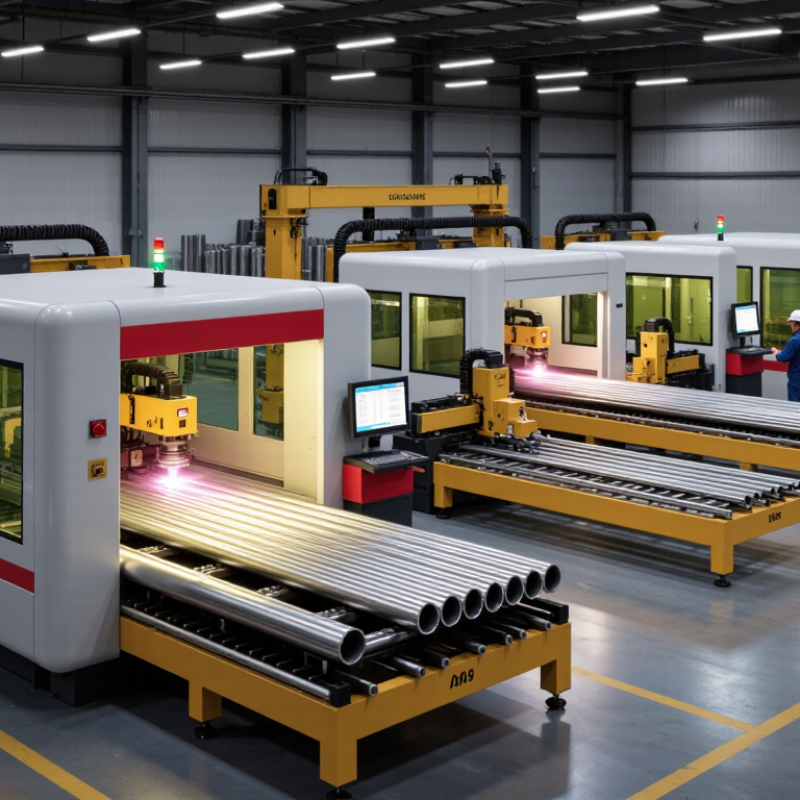
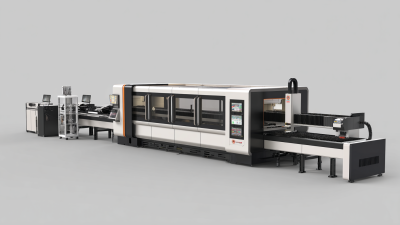
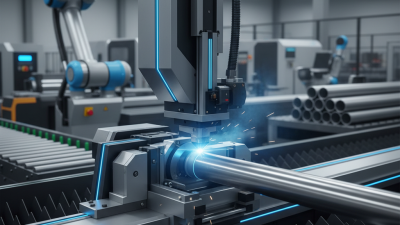
Pipe laser cutting is reshaping how manufacturers produce frames, exhaust systems, construction profiles, and precision components. Tubes once required several machines, manual marking, and repeated repositioning. Modern systems can load, measure, cut, drill, bevel, and unload in one controlled cycle. The difference is visible on the factory floor: fewer clamps, cleaner intersections, and less material handling.

Market data supports this shift. MarketsandMarkets estimated the global laser cutting machine market at approximately USD 7.3 billion in 2023, with projected growth toward USD 11.1 billion by 2028. Grand View Research also reported strong expansion through 2030, driven by automation, automotive production, and rising demand for flexible fabrication. However, these reports usually combine sheet and tube equipment. Pipe Laser Cutting figures remain less transparent. That limitation matters.

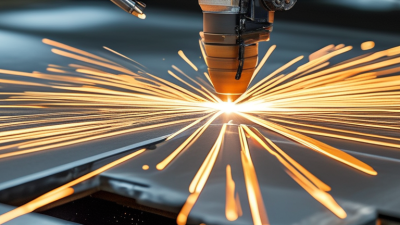
Professor John Powell, a recognized laser-cutting researcher and author of CO2 Laser Cutting, has emphasized a practical truth: “Laser cutting is a thermal process, not a mechanical one.” His point remains important. Beam quality, assist gas, wall thickness, chuck accuracy, and software settings directly affect the finished pipe.

This guide examines leading Pipe Laser Cutting machine manufacturers worldwide. It considers machine architecture, cutting capacity, automation, service networks, energy use, and application support. Brand reputation alone is not enough. A famous name may still perform poorly for a specific tube size or production mix.

Real factories are less perfect.

Downtime, operator training, maintenance access, and software learning curves can change the final investment result. The strongest manufacturers therefore provide more than a powerful laser source. They deliver a dependable production system, measurable support, and room for honest evaluation.

Top Pipe Laser Cutting Machine Manufacturers Worldwide

Define Pipe Laser Cutting Machines: 1–20 kW Fiber Sources and ±0.03 mm Accuracy

Top Pipe Laser Cutting Machine Manufacturers Worldwide

Pipe laser cutting machines use a focused fiber laser to process round, square, rectangular, and custom metal profiles. Their fiber sources commonly range from 1 to 20 kW, matching different thicknesses, materials, and production speeds. Lower power suits thin stainless steel and carbon steel tubes. Higher power handles thicker sections, but power alone does not guarantee better results.

A capable machine can achieve accuracy near ±0.03 mm under suitable conditions. This figure depends on calibration, tube straightness, chuck stability, thermal movement, and cutting parameters. In real workshops, a poorly aligned tube can ruin impressive specifications. Operators should inspect the first sample with a calibrated measuring tool. Small errors become visible around bolt holes, slots, and intersecting cuts.

Tips: Check the stated accuracy conditions before comparing machines. Ask for test cuts using your actual tube size and material. Confirm whether the specification refers to positioning accuracy, repeatability, or finished-part tolerance. Also examine the control system, autofocus response, automatic loading, and maintenance access. These details affect daily output more than a high power rating. A practical choice may be less powerful, yet more stable and easier to calibrate. That trade-off deserves honest review.

Pipe Laser Cutting Machines: Fiber Power and Typical Mild-Steel Capacity

Industrial pipe laser cutting machines commonly use 1–20 kW fiber laser sources. The chart shows representative maximum mild-steel wall thickness by power class; actual capacity depends on assist gas, material grade, tube geometry, optics, and cutting speed. Typical machine positioning accuracy is approximately ±0.03 mm.

Reference engineering ranges: higher laser power generally supports thicker tube walls and faster production, while accuracy remains dependent on machine construction, calibration, and operating conditions.

Compare Leading Worldwide Manufacturers by Tube Diameter and Cutting Length

Top Pipe Laser Cutting Machine Manufacturers Worldwide are best compared through measurable capacity, not marketing language.

Published specifications from leading international manufacturers commonly place compact tube systems near 20–120 mm diameters and six-meter cutting lengths. Heavy-duty models often reach 220 mm or more, with twelve-meter beds. Some specialized equipment exceeds these figures, but that capacity may reduce speed and positioning accuracy.

Market data supports this broader equipment shift. Grand View Research estimates the global laser cutting machine market will grow at approximately 8% annually through 2030. Fortune Business Insights also identifies fiber laser adoption as a major growth driver.

In practical terms, manufacturers serving structural steel usually emphasize larger chucks, stronger supports, and automated loading. Precision-tube suppliers may prioritize smaller diameters, thinner walls, and faster cycle times.

A larger diameter is not automatically better.

It can increase unused workspace and energy demand. Cutting length matters too. A twelve-meter machine sounds efficient, yet factory layout, loading time, and material straightness can limit its real output.

Check the rated diameter for round, square, and rectangular tubes separately. They are rarely identical. Review sample-cut data, tolerance records, and service response times before comparing prices.

Catalog figures are useful. They are not production guarantees.

Evaluate Cutting Capacity: Up to 30 mm Carbon Steel and 20 mm Stainless Steel

Top Pipe Laser Cutting Machine Manufacturers Worldwide

A serious pipe laser cutting machine should state its real cutting capacity clearly. Many systems advertise up to 30 mm carbon steel and 20 mm stainless steel, but these figures depend on laser power, material grade, tube diameter, and cutting gas. A specification sheet alone is not enough.

In practical testing, thick carbon steel needs stable piercing, sufficient gas pressure, and controlled heat input. Stainless steel demands clean nitrogen delivery and accurate focus positioning.

Operators should inspect the cut edge, kerf width, dross, and heat-affected area. Small details count. A rough edge can increase later grinding and fitting work.

Tube length and wall variation also affect results. A machine may cut a 30 mm carbon steel section successfully, yet struggle with repeated production cycles. I would request sample cuts using the customer’s actual material, not a perfect laboratory plate. Measure cycle time, dimensional tolerance, and tube deformation. Then review the results with the operator. That matters.

Some manufacturers publish maximum thickness without explaining the required speed or gas consumption. This can create unrealistic expectations. A better evaluation records power settings, nozzle size, assist gas, and pierce time for every trial. Stainless steel at 20 mm may be achievable, but production reliability could still require slower speeds. The honest answer is sometimes less impressive.

Assess Automation Features: 6–12 m Beds, Auto-Loading, and CNC Control

Top Pipe Laser Cutting Machine Manufacturers Worldwide should be assessed through automation, not brochure claims. A 6–12 metre bed supports long pipes, reducing repositioning and handling errors. However, the actual cutting length may shrink after chuck clearance and loading space are considered.

Auto-loading systems can move bundled tubes onto the working bed with fewer manual lifts. Look for measured loading capacity, alignment sensors, and stable support rollers. A good system detects diameter changes before cutting begins. It should also manage remnants without forcing operators to improvise. Small gains matter. During factory trials, watch the loading cycle closely. A slow return stroke can reduce daily output more than expected.

CNC control links cutting paths, material settings, piercing power, and nesting data. Clear interfaces help operators correct misalignment before scrap accumulates. Remote diagnostics can support maintenance, but they cannot replace practical training. Ask manufacturers for sample cycle times using your own pipe sizes and wall thicknesses. Request evidence from comparable installations, not only laboratory demonstrations. Automation is not always effortless. Sensors need cleaning, software requires updates, and poorly calibrated chucks can damage otherwise accurate work. A reliable evaluation includes acceptance tests, spare-part access, operator training, and documented tolerances.

Review Certifications, Warranty Coverage, and Global Technical Support

Top Pipe Laser Cutting Machine Manufacturers Worldwide

When evaluating pipe laser cutting machine manufacturers, inspect certifications beyond a logo on a website. ISO 9001 can indicate controlled production processes, while CE or equivalent market approvals support regional compliance. Ask for current certificates, issuing bodies, and matching machine models. In my experience, documentation often reveals more than polished sales claims. Check electrical safety reports, laser classification, and factory test records. Some certificates may cover only components, not the complete machine.

Warranty coverage deserves equal attention. A reliable agreement should state coverage periods for the laser source, cutting head, motors, and control system. Confirm whether parts, labor, travel, and shipping are included. Clarify response times for failures during production. A cheap warranty can become expensive when critical parts wait overseas. I have seen buyers overlook consumables and alignment services. That mistake is understandable, but costly.

Tips: Request a sample warranty, service-level schedule, and spare-parts list before ordering. Test remote support with a technical question. Can the engineer diagnose a cutting fault from photos, logs, and videos? Strong global support includes installation guidance, operator training, multilingual manuals, and regional technicians. Ask how support works across time zones and whether emergency assistance is available. References from nearby users provide useful evidence, though one customer experience cannot prove everything. Scrutinize response records, not promises.

Top Pipe Laser Cutting Machine Manufacturers Worldwide - Review Certifications, Warranty Coverage, and Global Technical Support

Anonymized industry benchmark based on commonly published specifications, certification routes, warranty terms, and support practices. This is not a company ranking.
Manufacturer Profile Typical Manufacturing Region Common Machine Configuration Typical Tube Diameter Range Commonly Documented Certifications or Compliance Routes Typical Warranty Coverage Global Technical Support Model Typical Lead-Time and Service Considerations
Integrated Asian Tube-Laser Manufacturers East Asia Fiber laser source, automatic loading and unloading, rotary chuck, pneumatic or servo-controlled clamping Approximately 20–350 mm, depending on chuck and bed configuration ISO 9001 quality-management certification is common; CE marking is generally required for European-market deliveries; electrical and machinery safety documentation varies by destination Usually 12 months for the complete machine; laser source, consumables, and damage caused by incorrect operation are often subject to separate terms Remote diagnostics, video training, manuals, online commissioning, and distributor-based field service in major export markets Competitive factory lead times; spare-parts availability and local engineering coverage should be verified before purchase
European Industrial OEMs Western and Central Europe High-precision fiber systems, automated material handling, integrated CAD/CAM and production monitoring Approximately 10–250 mm for standard industrial models; larger systems are available for structural profiles CE conformity assessment under applicable European machinery, electrical, and electromagnetic-compatibility requirements; ISO 9001 is widely used; ISO 13849-related safety design may apply Commonly 12 months, with optional extended service contracts; labor, travel, and wear parts may be covered differently Regional engineers, multilingual documentation, preventive maintenance programs, remote access, and structured operator training Longer configuration and factory-acceptance periods are common; service networks are usually strongest within Europe
North American Industrial System Builders United States and Canada Fiber tube-cutting platforms, custom automation, robotic loading, and production-cell integration Approximately 20–300 mm, with custom systems for larger structural tubing UL or CSA-related electrical approval may be requested by customers; NFPA and applicable local electrical-code requirements can affect installation; ISO 9001 is common among established suppliers Typically 12 months for equipment defects; installation, travel, consumables, and third-party components may have separate coverage conditions Telephone and online support, on-site commissioning, local service technicians, application engineering, and operator certification programs Domestic installation can reduce commissioning risk; custom automation and code compliance may extend project schedules
South Asian Export-Oriented Manufacturers South Asia Cost-focused fiber systems, manual or semi-automatic loading, rotary chuck, and application-specific fixtures Approximately 20–220 mm for commonly exported configurations ISO 9001 and destination-market declarations are common; CE documentation should be checked for the exact machine configuration rather than assumed from the product category Usually 12 months for major machine components; exclusions commonly include nozzles, lenses, protective windows, and other consumables Email, messaging platforms, video calls, remote troubleshooting, and support through regional agents or importers Lower purchase price may be offset by import logistics, customs clearance, technician travel, and longer replacement-part delivery times
Turkish and Regional Eurasian Manufacturers Türkiye and surrounding Eurasian markets Fiber tube cutters, profile-processing machines, automated chucks, and flexible systems for general fabrication Approximately 20–300 mm, subject to machine length and chuck design CE marking is common for machines supplied to European markets; ISO 9001 certification is frequently used; export documentation depends on the destination country Commonly 12 months, with optional paid maintenance extensions and different terms for imported laser sources and control components Factory technicians, regional dealers, remote support, installation assistance, and application trials for standard profiles Convenient access to European, Middle Eastern, and Central Asian markets; verify local spare-parts stock and language coverage
Middle Eastern and African Regional Integrators Middle East and Africa Imported or locally integrated fiber systems with installation, training, and after-sales service packages Approximately 20–250 mm for general metal-fabrication applications Compliance normally follows the machine's country of origin and the importing country's safety requirements; CE documents are often requested for imported European-market equipment Often 12 months, subject to commissioning records, approved operating conditions, and availability of authorized service personnel Local installation, operator training, scheduled maintenance, remote support, and spare-parts coordination through regional offices Service response depends strongly on country coverage, import procedures, technician availability, and local inventory levels
Specialized Heavy-Profile System Manufacturers Multiple global manufacturing regions High-power fiber sources, long-bed machines, multi-chuck layouts, bevel-capable heads, and automated profile handling Approximately 200–600 mm or more, depending on profile geometry, wall thickness, and machine architecture Market-specific machinery and electrical conformity documentation; ISO 9001 is common; additional safety validation may be required for custom production cells Usually 12 months, with negotiated extended coverage for major subsystems, service-level agreements, and preventive maintenance Dedicated application engineers, on-site commissioning, production-process validation, remote monitoring, and planned service visits Engineering, foundation, logistics, and acceptance testing are more complex; total project duration is generally longer than for standard machines
Evaluation note: Certification, warranty, and service conditions vary by model, destination country, laser source, automation package, and contract. Buyers should request the exact conformity declaration, warranty exclusions, response-time commitment, spare-parts list, and local service coverage in writing.