How to Choose the Best CNC Laser Cutting Machine for Your Needs?
Choosing the right CNC laser cutting machine can be challenging. With various options available, it's crucial to understand your specific requirements. According to industry expert John Smith, “Finding the perfect CNC laser cutting machine can significantly impact your productivity and precision.” This insight underscores the importance of careful consideration.
In today’s market, CNC laser cutting machines vary in capabilities, sizes, and functionalities. Each machine serves different needs, from simple designs to complex, intricate tasks. Evaluating your project requirements, such as materials and thickness, will guide your decision-making process.
It's also essential to assess the machine's ease of use and maintenance. Even the best machines require training and regular upkeep. While numerous firms promise advanced technology, real-world performance can differ. Understanding these nuances helps inform a more reliable choice. Selecting a CNC laser cutting machine is not just about initial cost; it's an investment in quality and efficiency.
Key Considerations When Selecting a CNC Laser Cutting Machine
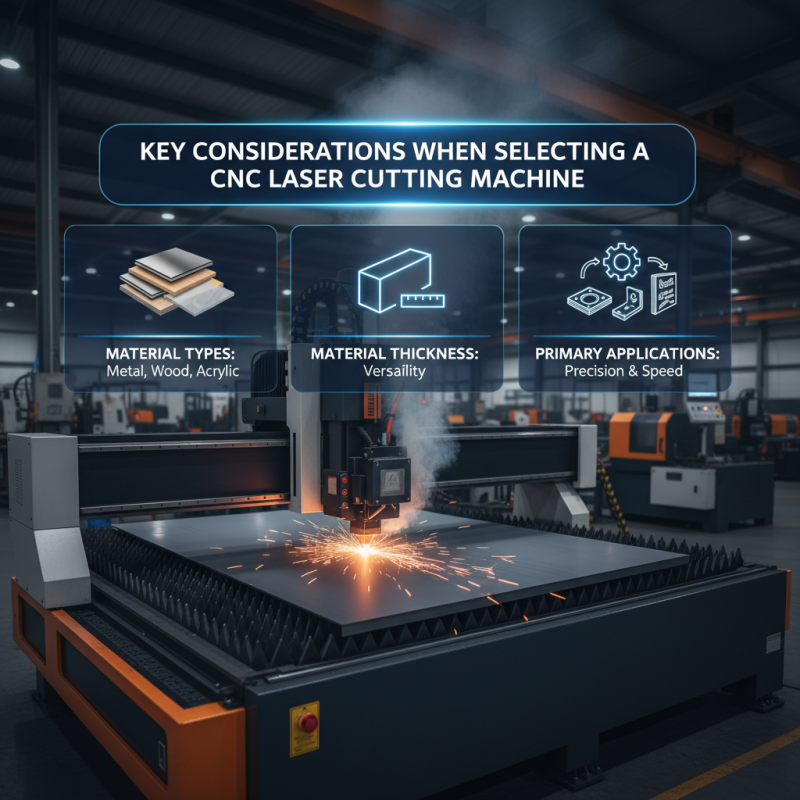
When selecting a CNC laser cutting machine, several key factors come into play. First, consider the material types you will work with. Different machines excel at cutting various materials like metal, wood, or acrylic. Understanding your primary applications will guide your decision. Also, the thickness of the materials is crucial. A machine capable of handling thicker materials may offer more versatility.
Next, evaluate the cutting speed and precision of the CNC laser cutting machine. Faster cutting speeds can increase productivity, but precision is non-negotiable. Look for specifications that detail the machine's tolerance and accuracy levels. Efficient machines strike a balance between speed and detail, catering to high-demand projects without sacrificing quality.
Lastly, think about the machine's ease of use and maintenance. User-friendly software and interfaces are vital for reducing learning curves. Regular maintenance becomes a real challenge if the machine isn't straightforward to service. Reflect on your team's technical skills and available support resources. These considerations are essential for making a well-informed choice.
Understanding Different Types of CNC Laser Cutting Technologies
When choosing a CNC laser cutting machine, understanding the different technologies is crucial. The most common types include CO2, fiber, and Nd:YAG lasers. CO2 lasers are versatile. They work well with non-metal materials, such as wood and acrylic. Fiber lasers excel in cutting metals with precision. Their efficiency is notable, especially for thin materials.
It's important to evaluate your specific cutting needs. If you often work with metal, a fiber laser could be your best option. But, if your projects include plastics and wood, consider a CO2 laser. Each technology has unique strengths and limitations. Mistakes can happen. Not every project requires high-speed cutting, so analyze your workflow.
Tips: Ensure you review machine specifications thoroughly. Look for user reviews and case studies before purchasing. Don’t overlook maintenance needs; some machines require more upkeep than others. Understand your budget but remember that quality often justifies a higher initial investment. Choose wisely; it impacts your future projects significantly.
Evaluating Your Material Compatibility with Laser Cutting Machines
When evaluating material compatibility with CNC laser cutting machines, consider the specific characteristics of the materials you intend to work with. The most common materials include metals, plastics, wood, and fabrics. Each of these materials interacts differently with laser cutting. For instance, metals can reflect laser light, requiring machines with higher wattage and specific wavelengths. According to industry reports, lasers cutting through aluminum require at least 1,000 watts to achieve efficient cutting speeds and desirable thickness levels.
Also, consider the thickness of your material. Materials vary in thickness, affecting the cutting speed and quality. For instance, acrylic can be cut efficiently at various thicknesses, but optimizing speed can lead to burning if improper settings are used. One study indicates that optimal cutting speed for 6mm acrylic is approximately 10-20 mm/s. Experimentation and adjustments are critical as each material behaves uniquely under laser precision.
Lastly, ensure you possess adequate safety measures. Different materials produce distinct fumes during cutting, some of which can be harmful. For example, cutting polyvinyl chloride (PVC) can release toxic gases. Understanding these compatibility and safety factors greatly enhances your precision and effectiveness in CNC laser cutting operations. Be prepared to face some challenges during the learning process. Each error provides an opportunity to refine your practices and enhance your craft.
Assessing Machine Specifications for Optimal Performance
When selecting a CNC laser cutting machine, it is crucial to examine machine
specifications closely. Key features include laser power,
cutting speed, and nozzle diameter.
According to a recent industry report, machines with higher wattage, typically starting at 100W,
can perform cutting tasks more efficiently. This power level allows operators to achieve precise cuts
on thicker materials, enhancing production quality.
Consider also the cutting speed, which is often measured in mm/min. High-performance machines may reach
speeds exceeding 1000 mm/min. However, faster speeds can compromise cut quality.
A balance between speed and precision is essential. In real-world applications, many operators suggest
aiming for a speed that allows for clean, finished edges while maintaining productivity.
Further, choose a machine with adjustable settings for different materials.
This feature is vital for diverse projects. Operators often note issues when machines lack
material-specific settings, leading to inconsistent results. Reviewing customer feedback and
independent studies can provide insights into a machine's reliability. Documented experiences indicate
that investing time in understanding specifications can save costs in the long run.
Budgeting for Your CNC Laser Cutting Machine Purchase and Maintenance
When budgeting for a CNC laser cutting machine, consider both initial costs and ongoing maintenance. According to industry research, the average purchase price can range between $10,000 and $500,000, depending on the machine’s specifications. This wide gap means you need to define your requirements clearly. Do you need high precision or higher speed? Identifying your priorities will help narrow down your options.
Maintenance costs also play a critical role in your budget. Estimates suggest that annual maintenance can range from 10% to 20% of the machine's purchase price. Regular upkeep is essential to maintain optimal performance and extend the machine's lifespan. Neglecting maintenance can lead to devastating downtime and costly repairs. On the other hand, investing slightly more in reliable components might save money in the long run.
It's important to factor in hidden costs as well. Consumables like lenses and assist gases can add up. Reports indicate that businesses often overlook these recurring expenses, which can lead to budget overruns. Striking a balance between upfront investment and ongoing costs requires careful foresight and planning.
How to Choose the Best CNC Laser Cutting Machine for Your Needs? - Budgeting for Your CNC Laser Cutting Machine Purchase and Maintenance
| Dimension |
Description |
Estimated Cost (USD) |
Maintenance Frequency |
Lifespan (Years) |
| Laser Type |
CO2 laser, Fiber laser |
3000 - 15000 |
Annually |
10 - 15 |
| Bed Size |
Work area size to accommodate materials |
5000 - 20000 |
As needed |
10 - 15 |
| Cutting Speed |
Max speed of cutting operation |
10000 - 30000 |
Monthly |
10 - 15 |
| Power Consumption |
Energy efficiency of the machine |
1000 - 5000 |
Quarterly |
10 - 15 |
| Software Compatibility |
Types of software supported for design |
Variable |
As needed |
N/A |