How to Choose the Best Metal Laser Cutting Machine for Your Needs?
Choosing the right Metal Laser Cutting Machine is crucial for your business. The market is filled with various options, making the decision overwhelming. This process requires careful consideration of your specific needs. A good machine can improve efficiency and precision.
Factors like material type, thickness, and budget play significant roles. Each machine has unique capabilities. Understanding these differences is essential for making an informed choice. It's easy to overlook critical specifications. A perfect choice for one project may not suit another.
Investing time in research can save money in the long run. Seek advice from experts in the field to gain insights. This ensures that you make the right decisions, avoiding mistakes that could impact your operations. With the right Metal Laser Cutting Machine, you can achieve exceptional results.
Understanding Metal Laser Cutting Machines and Their Applications
Metal laser cutting machines are essential tools in modern manufacturing. They use concentrated laser beams to cut through metals with precision. Industries like automotive, aerospace, and fabrication rely heavily on these machines for various applications. From intricate parts to large steel sheets, their versatility is unmatched.
Understanding the types of lasers used is crucial. CO2 lasers are common for cutting non-metal materials but can also handle thin metals. Fiber lasers, on the other hand, excel in cutting thicker metals with speed and accuracy.
Operators need to consider the material type and thickness before choosing the right machine. Knowledge of these factors can greatly affect production quality.
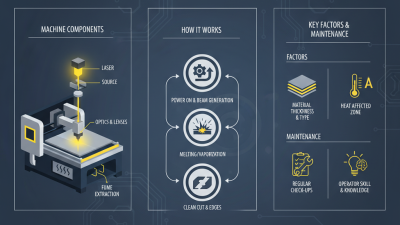
While these machines are powerful, they require skilled operators. Training is important to avoid mistakes that could lead to costly downtime. Additionally, regular maintenance is necessary to ensure longevity. Many users may underestimate how often these machines need servicing. A lack of awareness can lead to unexpected failures, impacting productivity. Thus, understanding the nuances of laser technology is vital for making informed decisions.
Key Factors to Consider When Choosing a Laser Cutting Machine
Choosing a metal laser cutting machine involves several key factors. Begin with the material type and thickness you intend to cut. Different lasers excel at certain metals and thickness ranges. For instance, some machines are better suited for thin materials, while others can handle thicker ones. Understanding your specific needs prevents wasted resources and time.
Another crucial element is the laser power. Higher wattage typically allows for faster cutting speeds and the ability to cut through denser materials. However, more power often comes with increased costs. Consider how often you will use the machine at full capacity. Are you a small business or a large manufacturing facility? Balance between power and budget is essential.
The software compatibility is often overlooked yet vital. A user-friendly interface can enhance productivity. Check if the machine integrates well with existing software in your workshop. Training costs and learning curves can add to your investment. Reflect on your team's skill level and willingness to adapt. This decision impacts long-term efficiency and overall satisfaction with your equipment.
Types of Laser Cutting Technologies and Their Benefits
When selecting a metal laser cutting machine, understanding the various technologies available can significantly aid in your decision. The three main types of laser cutting technologies are CO2 lasers, fiber lasers, and solid-state lasers. Each offers unique benefits and limitations. A recent report by MarketsandMarkets indicates that fiber lasers are gaining popularity due to their efficiency and speed. They provide faster cutting speeds compared to CO2 lasers, especially on thin materials.
CO2 lasers are well-suited for cutting non-metal materials such as wood and plastics. They are often a cost-effective choice for businesses that require versatility. However, their cutting capabilities on metals are generally slower and less precise than fiber lasers. Interestingly, many manufacturers overlook the total cost of ownership and operational efficiency in their assessments, leading to unexpected expenses in maintenance and power usage.
Solid-state lasers are considered a newer technology, offering improved efficiency. Their applications are expanding, making them worth exploring. Still, they may not be the best fit for all businesses due to initial investment costs. Clarity in your operational needs is essential. Each technology has strengths and weaknesses, making it crucial to match them with your specific requirements for optimal performance.
How to Choose the Best Metal Laser Cutting Machine for Your Needs?
| Laser Technology |
Best For |
Cutting Thickness |
Typical Materials |
Benefits |
| CO2 Laser Cutting |
Non-metal materials |
Up to 20 mm |
Wood, Acrylic, Plastic |
Cost-effective, versatile for various materials |
| Fiber Laser Cutting |
Metal sheets |
Up to 25 mm |
Steel, Aluminum, Brass |
High precision, faster cutting speeds |
| YAG Laser Cutting |
Thick metals |
Up to 15 mm |
Steel, Titanium |
Great for thick materials, good beam quality |
| Solid State Laser Cutting |
High-precision applications |
Up to 30 mm |
Copper, Aluminum |
Excellent for complex shapes, high energy efficiency |
Assessing Your Material Thickness and Cutting Speed Requirements
When selecting a metal laser cutting machine, understanding your material thickness and cutting speed requirements is crucial. Different materials have various thickness levels, and this will dictate the type of laser you need. For instance, thinner materials can be cut with lower-powered lasers, while thicker materials require higher-powered machines. If the thickness is not well assessed, you may face cutting inefficiencies or even damage the material.
Cutting speed is another significant aspect. It affects both production time and the quality of the cut. Higher speeds can result in rougher edges, while slower speeds typically yield cleaner cuts. However, speed also depends on the thickness of the material being cut. Juggling between speed and quality can be challenging. Some projects may not require high speed, allowing for better-quality cuts instead. It's necessary to find a balance that meets your specific needs.
Inexperienced users often overlook these factors. They might assume one machine fits all applications, which isn’t true. Testing and adjustments might be needed to achieve the desired results. Reflecting on past experiences, users can learn from mistakes. Investing time in understanding these requirements leads to better choices, ensuring the metal laser cutting machine aligns with production goals.
Budgeting and Cost Considerations for Metal Laser Cutting Machines
When choosing a metal laser cutting machine, budgeting is crucial. Prices can vary significantly based on features and capabilities. Entry-level models may start from a few thousand dollars, while advanced systems can exceed tens of thousands. It's essential to match the machine's capabilities with your business needs and budget constraints.
Consider not just the initial purchase price but also ongoing operating costs. Maintenance, power consumption, and potential upgrades can add up over time. Factor in the availability of parts and service support. Investing in a reliable source for maintenance can save you from future headaches.
Reflecting on the value that a machine brings is vital. A more expensive model may offer better speed and precision, increasing productivity. However, if your workload is minimal, such an investment might not be justified. Take the time to analyze production demands and financial potential before making a decision. Each business has unique needs. Balancing cost and capability requires careful thought and research.
Cost Comparison of Different Metal Laser Cutting Machines