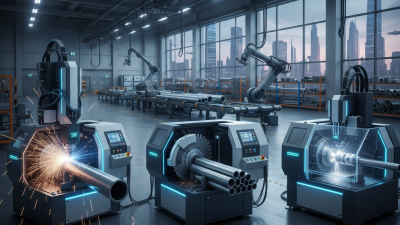
Top 10 Tube Laser Cutting Machines for Global Buyers?
In the global manufacturing landscape, Tube Laser Cutting technology is gaining significant traction. Recent industry reports suggest that the market for laser-cutting machines is projected to grow at a rate of over 6% annually. This growth reflects the rising demand for precision in metal fabrication across various sectors.
Tube Laser Cutting offers unparalleled accuracy and efficiency. It allows for complex geometries and intricate designs to be realized with minimal waste. A study by Market Research Future highlights that industries, such as automotive and aerospace, increasingly rely on this technology to achieve competitive advantages. However, despite its benefits, many businesses still face challenges in adopting these advanced systems.
Investing in the right Tube Laser Cutting machine can optimize production processes. Yet, choosing the ideal system requires careful consideration of specific needs and capabilities. Buyers must reflect on the technical requirements and their budget constraints, as the quality of machines varies widely. Thus, understanding the landscape of Tube Laser Cutting is essential for making informed purchasing decisions.
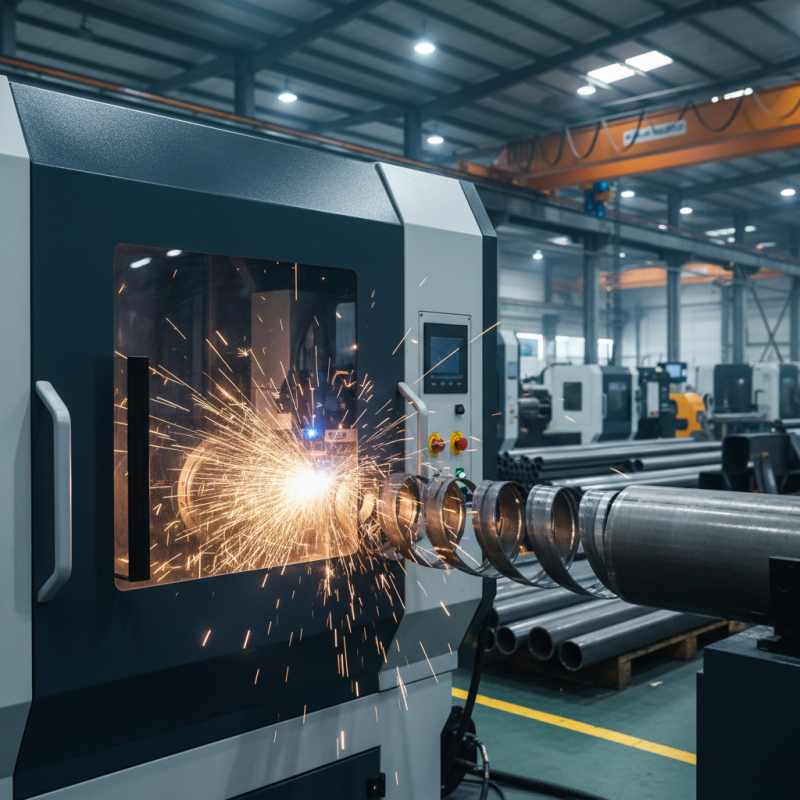
Overview of Tube Laser Cutting Technologies and Their Applications
Tube laser cutting technology has advanced significantly in recent years, catering to various industries. This technology allows for precise cutting of complex shapes and intricate designs. According to a report by MarketsandMarkets, the global market for laser cutting machines is projected to reach $6.2 billion by 2025, driven by increased demand for automation and precision in manufacturing.
Applications of tube laser cutting are vast, including automotive, aerospace, and construction sectors. These sectors benefit from the ability to cut materials like stainless steel and aluminum with minimal waste. Research indicates that companies adopting tube laser technology can reduce production times by up to 25%. The efficiency gained through this process also minimizes energy consumption, aligning with sustainability goals.
Despite these advantages, some manufacturers face challenges in implementation. The initial investment costs can be high, and training staff on advanced machines requires time. Moreover, not all designs translate well to laser cutting, complicating production. Continuous evaluation of design feasibility is crucial for effective utilization.
Top 10 Tube Laser Cutting Machines for Global Buyers
| Model |
Laser Type |
Power (W) |
Max Tube Diameter (mm) |
Cutting Speed (m/min) |
Automation Level |
Applications |
| Model A |
Fiber Laser |
2000 |
150 |
30 |
Fully Automatic |
Automotive, Aerospace |
| Model B |
CO2 Laser |
3000 |
200 |
25 |
Semi-Automatic |
Signage, Furniture |
| Model C |
Fiber Laser |
4000 |
250 |
35 |
Fully Automatic |
Industrial, Machinery |
| Model D |
CO2 Laser |
5000 |
300 |
20 |
Fully Automatic |
Construction, Heavy Equipment |
| Model E |
Fiber Laser |
6000 |
100 |
40 |
Semi-Automatic |
Electronics, Telecom |
| Model F |
Fiber Laser |
7000 |
180 |
28 |
Fully Automatic |
Furniture, Decor |
| Model G |
CO2 Laser |
8000 |
190 |
24 |
Semi-Automatic |
Medical Equipment |
| Model H |
Fiber Laser |
9000 |
160 |
32 |
Fully Automatic |
Aerospace, Automotive |
| Model I |
CO2 Laser |
10000 |
220 |
22 |
Semi-Automatic |
Metalworking, Light Industry |
| Model J |
Fiber Laser |
11000 |
170 |
38 |
Fully Automatic |
Fashion Industry, Custom Parts |
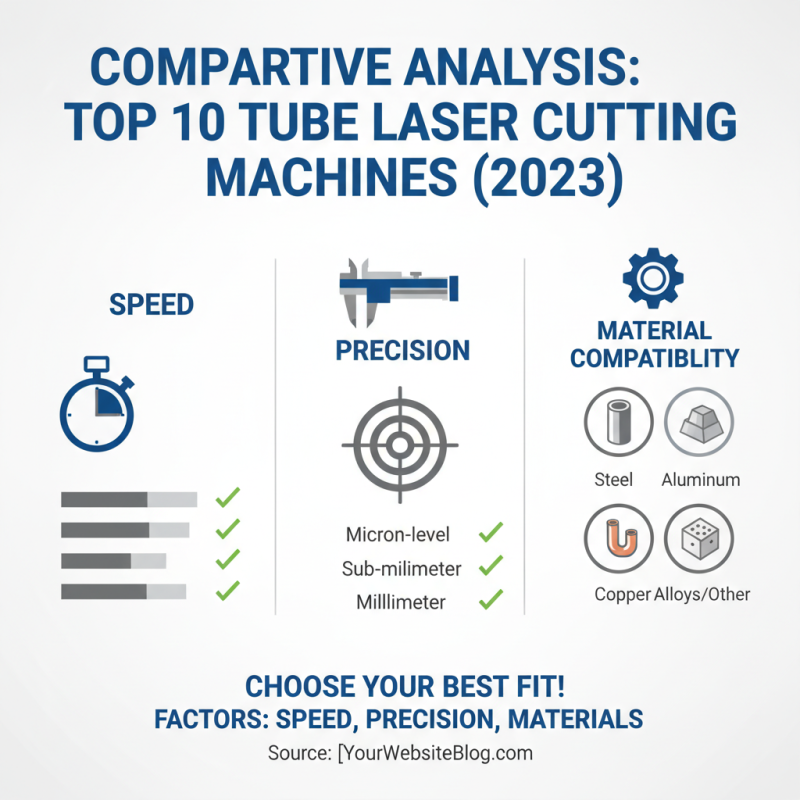
Comparative Analysis of Top 10 Tube Laser Cutting Machines in 2023
In 2023, the market for tube laser cutting machines has evolved significantly. Buyers must consider several factors to make an informed decision. The top 10 machines vary in speed, precision, and material compatibility. Understanding these differences can help you find the best fit for your needs.
A critical point to explore is the type of materials each machine can handle. Some excel with steel, while others perform better with aluminum or brass. Make sure to evaluate the thickness and length capabilities of each option. Also, look into maintenance requirements. Neglecting regular upkeep can hinder machine performance.
**Tip:** Consider a machine that offers advanced features like automatic calibration. Such features can save time and enhance cutting accuracy.
Another aspect to ponder is the support and training provided by manufacturers. This can greatly impact your operational efficiency. A reliable supplier can offer assistance when problems arise.
**Tip:** Before purchasing, read user reviews to gauge real-world performance. Hearing from current users can highlight potential drawbacks you might not consider.
Key Features and Specifications of Leading Tube Laser Cutting Systems
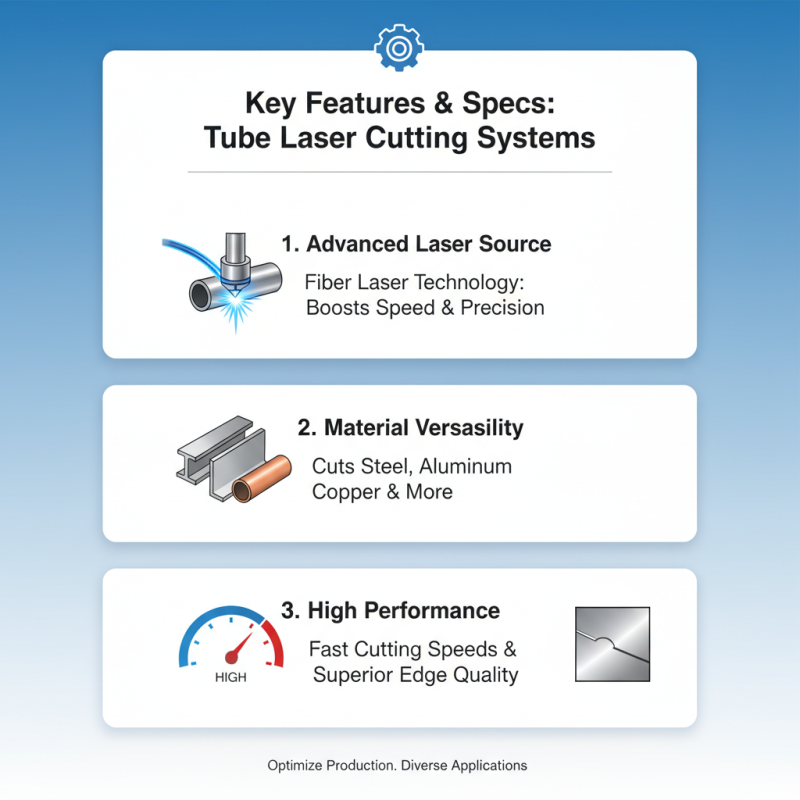
When exploring tube laser cutting machines, key features can significantly impact performance. High-quality systems often boast advanced power sources, such as fiber laser technology. This improves cutting speed and precision. The machine's ability to handle various materials, including steel and aluminum, is essential for diverse applications.
Moreover, automation plays a vital role in modern tube laser cutting systems. Features like automatic loading and unloading reduce labor costs. They also enhance efficiency. User-friendly interfaces make it easier for operators to adjust settings quickly. However, some machines can be complex. Training might be necessary to fully utilize their capabilities.
Monitoring and software integration are additional crucial aspects. Real-time data allows for immediate adjustments, ensuring optimal cutting quality. However, not all systems offer seamless software compatibility, which can lead to frustrations. Choosing the right machine requires careful consideration of these specific features and understanding the potential pitfalls. Being aware of these aspects is crucial for making an informed decision.
Market Trends and Demand for Tube Laser Cutting Machines Worldwide
As industries evolve, the demand for tube laser cutting machines is rising. These machines offer precision and efficiency, making them popular in various sectors. Many manufacturers are investing in advanced technology to meet global needs. Innovations in cutting speed and energy efficiency are also noteworthy.
Market trends show an increase in customization options for tube laser cutting machines. Buyers are seeking flexibility to accommodate different materials and thicknesses. Integration with automation systems is becoming essential for many production lines. However, some users struggle to fully utilize these advanced features, highlighting a gap in training and skill development.
As the market grows, quality assurance remains a major concern. It's crucial for manufacturers to not only focus on technological advancements but also on service and support. Feedback from users often reveals that maintenance issues can hinder productivity. Companies must address these challenges to foster long-term relationships with clients.
Future Innovations in Tube Laser Cutting Technology and Industry Impact
The future of tube laser cutting technology is bright and evolving rapidly. Innovations in this field are making production processes more efficient and precise. New materials and software solutions are emerging, streamlining workflows and reducing waste. Industry professionals emphasize the importance of staying updated with these advancements to maintain a competitive edge.
One trend involves integrating artificial intelligence with laser cutting machines. AI can optimize cutting paths and monitor machine performance in real-time. This leads to fewer errors and enhances productivity. Moreover, advancements in fiber laser technology are making machines more versatile, allowing for a wider range of materials to be processed.
Tip: Invest in training for your staff. Familiarizing them with new technologies is essential for maximizing equipment potential.
Another area of innovation is automation. Automated systems can significantly enhance efficiency, especially in high-volume production settings. Yet, this shift also raises questions about labor dynamics and the need for skilled workers. Balancing automation with workforce training is a challenge many industries face.
Tip: Regularly assess your production lines. Identify bottlenecks and explore automation options that fit your specific needs.
As the market grows, adaptability will be crucial. Companies must remain flexible to integrate new tools while reviewing their long-term strategies. Embracing change is a fundamental part of this industry's evolution, but it requires constant reflection on current practices.