Top 10 Laser Machine Types for Global Buyers to Consider?
In a world where precision and efficiency are paramount, the laser machine industry is evolving rapidly. Experts like Dr. Emily Carter, a specialist in laser technology, emphasize the significance of these machines. She states, "Laser machines are transforming various industries by enhancing production capabilities.”
With various types of laser machines available, global buyers face a daunting task in selecting the right one. Understanding the specific applications and features of each type is essential. From cutting and engraving to marking and welding, laser machines serve diverse purposes across different sectors. Choosing the right machine can greatly impact productivity and cost-effectiveness.
However, buyers must be aware of potential challenges. Not all laser machines are created equal, and features may vary significantly. A laser machine that excels in one area might fall short in another. This inconsistency can lead to frustration and unexpected costs. Therefore, thorough research and expert advice are crucial before making a decision in this complex market.
Top 10 Laser Machine Types and Their Industrial Applications
Laser machines have become pivotal in various industries. Their versatility allows for a wide range of applications. From cutting metal to engraving glass, each type serves a specific purpose.
CO2 lasers are popular for cutting non-metal materials such as acrylic and wood. They produce high-quality cuts with smooth finishes. Fiber lasers, on the other hand, excel in cutting and engraving metals. Their efficiency is noteworthy, particularly for robust materials. Solid-state lasers are another option, often used in industrial applications for welding.
In addition to these, UV lasers find their place in delicate processes. They are ideal for marking and engraving sensitive materials. Although laser machines are powerful tools, users must consider factors like maintenance and operating costs. The learning curve can be steep, requiring thoughtful training and experience. Choosing the right laser machine is crucial for maximizing productivity and minimizing errors.
Comparison of Laser Machines: Power, Speed, and Cost Efficiency
When considering laser machines, three main factors come to light: power, speed, and cost efficiency. Each type of laser machine offers its unique strengths. For instance, CO2 lasers excel in cutting and engraving non-metallic materials. Their power and speed are commendable for wood and acrylic projects. However, they may lag behind fiber lasers when it comes to metal processing.
Fiber lasers shine in metal applications. They demonstrate high speed and efficiency, especially for industrial jobs. Yet, their cost can be a barrier for smaller businesses. Not every buyer can afford the initial investment, even if long-term savings are appealing. Moreover, some buyers may overlook maintenance needs. Proper upkeep is crucial for sustained performance, regardless of machine type.
Understanding these nuances is vital for buyers. Evaluating production needs can lead to better choices. Power variations may fit specific requirements, influencing overall costs. It’s essential to not only consider price but also the machine's long-term value. With careful analysis, buyers can avoid common pitfalls and make informed decisions.
Top 10 Laser Machine Types for Global Buyers to Consider
| Laser Machine Type |
Power (W) |
Max Speed (mm/s) |
Cost Efficiency ($/hr) |
| CO2 Laser Cutter |
40-150 |
300 |
25 |
| Fiber Laser Cutter |
500-4000 |
1000 |
30 |
| Solid State Laser |
200-2000 |
500 |
40 |
| UV Laser Cutter |
5-30 |
200 |
50 |
| DPSS Laser |
10-1000 |
600 |
35 |
| Pulsed Laser Machine |
100-1000 |
400 |
20 |
| Green Laser Cutter |
20-100 |
300 |
45 |
| Semiconductor Laser Machine |
5-100 |
250 |
60 |
| Multilayer Laser Machine |
50-500 |
350 |
25 |
| Laser Engraver |
40-200 |
300 |
30 |
Emerging Trends in Laser Technology: Innovations and Advancements
Emerging trends in laser technology highlight significant innovations and advancements in the field. According to a recent market analysis, the global laser market is projected to reach $14.8 billion by 2026. This growth is driven by the rising demand for lasers in various applications, such as manufacturing and medical procedures. Notably, advancements in fiber laser technology are revolutionizing industrial processes, providing improved precision and efficiency.
One standout trend is the development of ultra-fast laser systems. These systems can produce extremely short pulses of light, allowing for intricate processing capabilities. Emerging applications include high-precision cutting and drilling, showcasing how technology continues to evolve. However, challenges exist as manufacturers strive to maintain cost-effectiveness while improving performance.
Additionally, the integration of artificial intelligence (AI) in laser technology is gaining traction. AI can optimize laser operations and enhance output quality. While this innovation offers exciting possibilities, it also raises questions about the reliability of automated systems. Companies must balance the benefits of AI with potential risks, making it an ongoing area for reflection and improvement.
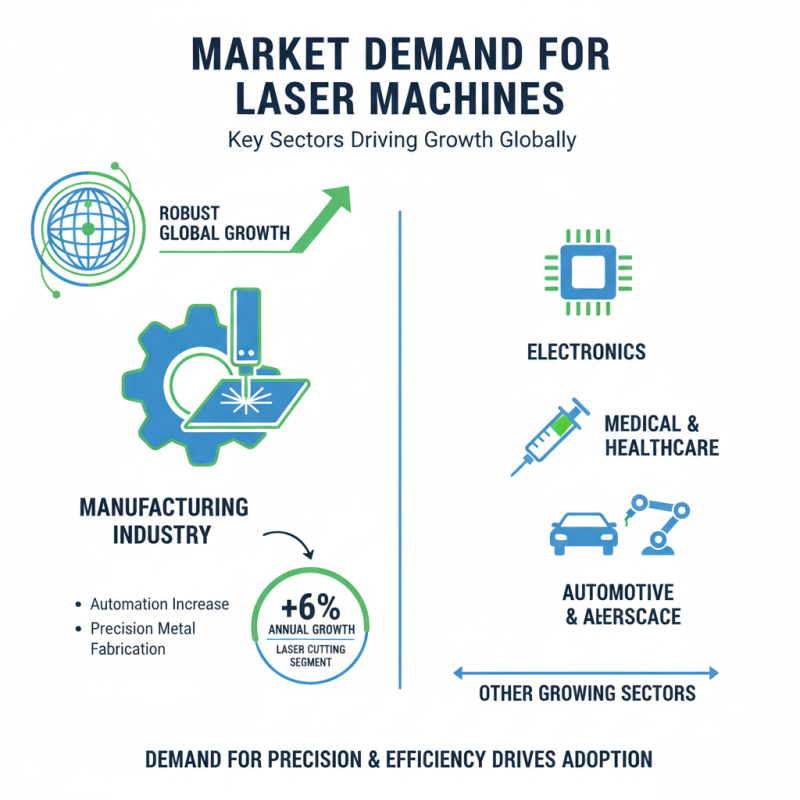
Market Demand for Laser Machines: Key Sectors Driving Growth Globally
The global laser machine market is witnessing robust growth, spurred by high demand across various sectors. Notably, the manufacturing industry stands out. Reports indicate that the laser cutting segment is expected to grow by approximately 6% annually. This rise can be attributed to increasing automation and demand for precision in metal fabrication.
The healthcare sector is also a significant contributor. Laser technologies are being adopted for surgical applications and diagnostics. According to industry insights, the medical lasers market is projected to reach over $6 billion by 2025, reflecting a compound annual growth rate (CAGR) of more than 10%. This surge highlights the value of laser machines in enhancing treatment outcomes.
In the automotive arena, laser machines are crucial for assembling and welding processes. A notable trend is the integration of lasers for lightweight material processing. This shift aligns with the industry's shift towards more fuel-efficient vehicles. Despite these advancements, challenges remain. Not every manufacturer can afford the high costs associated with advanced laser technologies. Addressing these issues is essential for unlocking further growth potential.
User Considerations: Choosing the Right Laser Machine for Your Needs
When choosing a laser machine, buyers should consider several factors to meet their specific needs. The type of laser can greatly affect the quality and efficiency of operations. According to a report by Research and Markets, the global laser technology market is projected to reach $24 billion by 2025. This indicates the increasing adoption of various laser types across industries.
One critical consideration is the material to be processed. Different lasers are optimized for specific materials, such as CO2 lasers for non-metals and fiber lasers for metals. Each material requires a different wavelength, affecting the cut quality and precision. A study by MarketsandMarkets highlights that precision is a common challenge, affecting 38% of users' production efficiency. Maintaining focus on material compatibility can lead to better outcomes and minimize wastage.
Budget constraints also play a vital role. While high-powered lasers offer advanced capabilities, they may not always be justifiable for small businesses. A report by Statista reveals that 45% of small manufacturers prioritize cost over advanced features. This often leads to choosing less expensive options that may not fully meet production needs, resulting in future regrets. Evaluating long-term benefits against initial expenses is essential for making informed decisions.
Top 10 Laser Machine Types for Global Buyers to Consider