Essential Tips for Metal Laser Cutting Success?
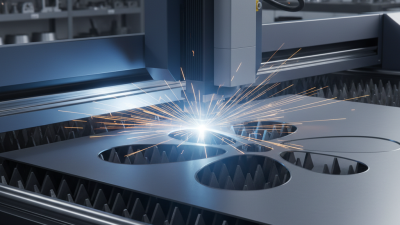
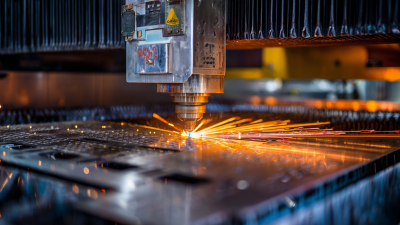
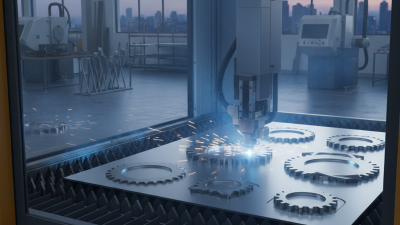
Metal laser cutting has transformed the manufacturing industry. It enables precise cuts and intricate designs in various materials. This technology is not just about speed; it is also about accuracy and efficiency.
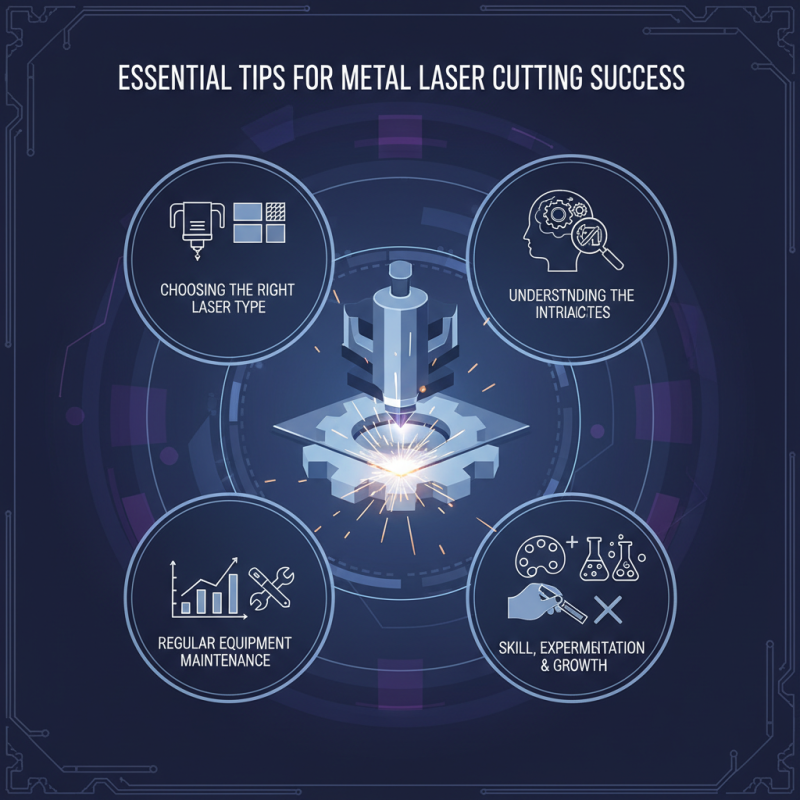
To achieve success in metal laser cutting, one must understand several critical factors. Choosing the right type of laser is vital. Each material requires specific settings and wavelengths. Failing to adjust these can lead to poor results.
Moreover, it's essential to maintain equipment regularly. Neglect can cause issues that hinder performance. Understanding the intricacies of metal laser cutting is key. It is a blend of art and science, demanding both skill and experimentation. Embrace the learning process. Strive for perfection, but also accept mistakes as part of growth.
Essential Tips for Metal Laser Cutting Success
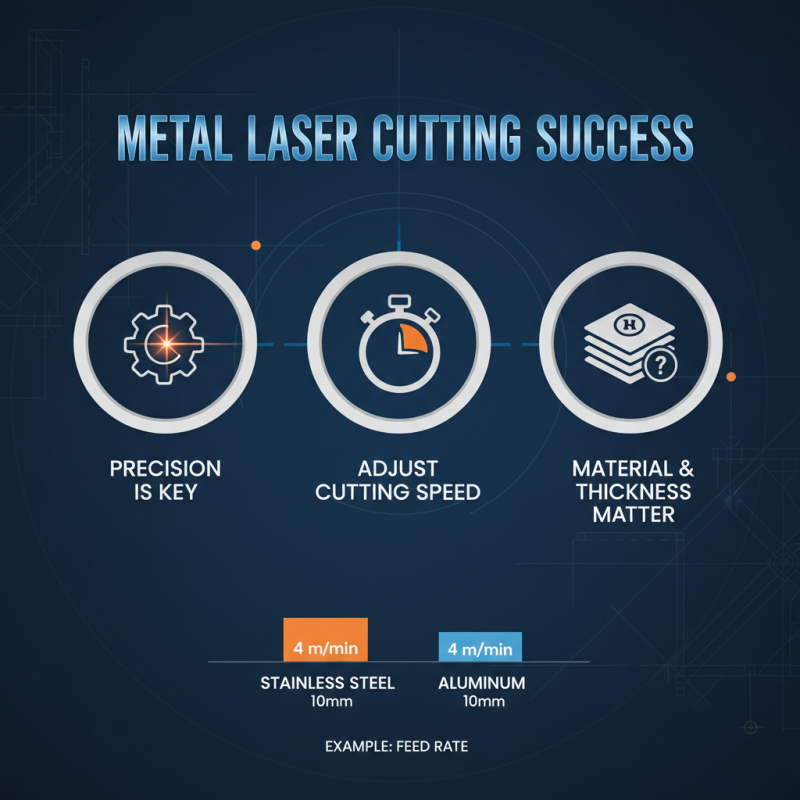
Metal laser cutting has become an essential process across various industries. It's crucial to understand the nuances for optimal results. Precision is key. According to industry reports, cutting speeds can vary based on material thickness and type. For instance, cutting stainless steel at 10 mm thickness may require a feed rate of 4 m/min.
One common mistake is selecting the wrong laser settings. This can lead to excessive dross or burn marks. Reports indicate that about 30% of manufacturers face such challenges due to improper parameters. Testing different settings before final production can mitigate these issues. Regular machine maintenance is a practice many overlook. Neglecting upkeep can lead to performance drops and increased costs.
Quality of the finished product also hinges on the focus of the laser beam. If the focus is off, cutting can become uneven. This is a frequent issue, and a reflection of operator error or carelessness. Identifying the right focus point is essential for achieving clean cuts and the expected tolerances.
Understanding Metal Types and Their Laser Cutting Characteristics
When it comes to laser cutting metal, understanding the material is crucial. Different metals react differently to laser technology. For instance, stainless steel is robust and can withstand high temperatures, making it ideal for intricate designs. On the other hand, aluminum is lighter but has its challenges. It reflects laser beams, which can lead to inefficiencies. An operator must adjust settings carefully to achieve optimal results.
Another factor to consider is the thickness of the metal. Thicker materials require more power and slower cutting speeds. This sometimes results in burn marks or rough edges. Operators often face the dilemma of finding the right balance between speed and quality. It's not uncommon to experiment with various settings to refine the process. In contrast, thin sheets of metal are easier to cut but can warp or melt if not monitored closely.
Each type of metal comes with unique cutting characteristics. Some may require additional post-processing to achieve a clean finish. It's essential to learn from each project. Mistakes can serve as valuable lessons. Ultimately, understanding the specifics of each metal type enhances the likelihood of success in laser cutting endeavors.
Selecting the Right Laser System for Specific Metal Applications
When selecting a laser system for metal cutting, consider the specific application. Different metals require different laser types. For instance, CO2 lasers are effective for cutting thinner materials, like aluminum and copper. Fiber lasers excel in cutting thicker metals. Metal thickness can significantly affect the choice of laser.
Power levels also play a crucial role. A higher wattage laser can cut through thicker materials more efficiently. However, too much power can burn or warp the metal. Finding the right balance is vital. The speed of the cutting process matters as well. Slower cuts often yield better accuracy for intricate designs, but they can be time-consuming.
Reflect on your skill level and experience. Advanced systems may offer more features but could overwhelm a novice operator. Simple systems are easier to learn but may lack precision on demanding tasks. Invest time in training and understanding the machinery. This will ultimately lead to better outcomes in metal laser cutting tasks.
Optimal Settings for Laser Cutting: Power, Speed, and Frequency
When it comes to laser cutting metal, optimal settings can make a significant difference. Power, speed, and frequency are critical factors. High power settings can quickly cut through thicker metal, but they can also create excessive heat. This might lead to warping and poor edge quality. It's essential to find a balance in power levels. Sometimes, lower power can deliver cleaner cuts on thinner materials.
Speed settings also play a crucial role. Cutting too fast can result in incomplete cuts or a rough finish. Conversely, cutting too slowly may cause overheating. Experimenting with different speeds is vital for finding the best combination. Short runs might allow for higher speeds, while longer production runs may benefit from a more measured approach.
Frequency affects the laser's performance over time. Lower frequency may provide better penetration, but it can also lead to slower cutting speeds. Higher frequencies may increase cutting efficiency but risk damaging the material. Adjusting settings according to material type is necessary. Regular tests can help identify the most efficient settings. The optimal strategy often requires ongoing adjustments and reflections on the results.
Common Challenges in Metal Laser Cutting and How to Overcome Them
Metal laser cutting has transformed modern manufacturing, but challenges remain. According to a report by the International Laser Manufacturing Association, issues such as material selection, cutting speed, and kerf width are prevalent. For example, improper material choice can lead to overheating, excessive dross, and a poor finish. It is crucial to select materials specifically designed for laser cutting. Metals like aluminum and stainless steel are popular choices.
Another challenge is optimizing cutting parameters. For every metal type, there are unique settings for power, speed, and focus. A study from the Laser Institute of America highlights that about 30% of laser cutting errors stem from incorrect parameter settings. Operators must be familiar with their machinery and willing to adjust variables based on real-time observations. Reactive monitoring can prevent costly mistakes and ensure precise cuts.
Additionally, operators often face difficulties with machine maintenance. A well-maintained machine reduces downtimes and inconsistencies. Reports indicate that around 25% of laser cutting downtime is due to machine failures. Regular checks and preventative measures can extend equipment life and maintain cutting quality. Being mindful of maintenance helps in achieving a smoother production process.
Conclusion
Metal Laser Cutting is a highly precise and efficient process that requires a deep understanding of different metal types and their characteristics. Each metal behaves uniquely under laser applications, making it crucial to select the appropriate laser system tailored to specific metal materials. Furthermore, setting optimal parameters—such as power, speed, and frequency—plays a pivotal role in achieving superior cutting results.
In addition to technical proficiency, operators often face challenges during the Metal Laser Cutting process, including material warping and inconsistent quality. However, identifying these common issues and implementing effective strategies can significantly enhance performance. Lastly, maintaining laser equipment properly is essential to ensure consistent cutting quality, thereby maximizing productivity and minimizing downtime in the cutting process.