How to Choose the Best Metal Laser Cutting Machine for Home?
When selecting a "Metal Laser Cutting Machine For Home," you must consider various factors. Experts like John Smith, a respected figure in the laser cutting industry, once stated, "Choosing the right machine can transform your DIY projects into professional-quality outputs." This insight highlights the significance of informed decisions when investing in such technology.
Home users often seek machines that balance affordability and functionality. A good laser cutter should meet specific needs for projects, such as engraving or cutting different metal types. Yet, many beginners often overlook essential features, such as power output and bed size, that can lead to frustration later on.
Additionally, proper research can prevent costly mistakes. Reviews and recommendations from seasoned users can offer valuable perspectives. However, remember that each user has unique needs. What works for one might not work for another. Reflecting on your individual requirements is crucial for successful purchases in this growing field.
Understanding the Basics of Metal Laser Cutting Machines
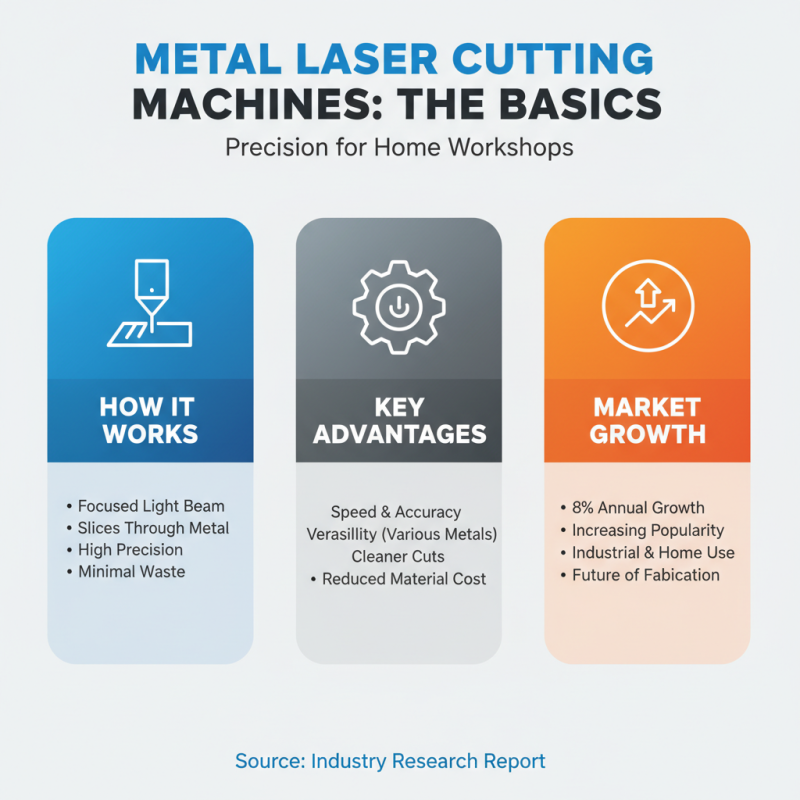
Metal laser cutting machines are becoming increasingly popular for home workshops. Understanding how these machines work is crucial for making an informed decision. Unlike traditional methods, laser cutting uses focused light to slice through metal, providing high precision and minimal waste. According to a report by Industry Research, the global laser cutting machine market is expected to grow by 8% annually, highlighting its increasing relevance.
Choosing the right machine involves several factors. Key considerations include power, cutting speed, and thickness of materials. A higher wattage typically allows for thicker metals, but it may also increase energy consumption. Moreover, automation features can enhance efficiency, but they often come at a higher cost.
Tip: Consider the specific projects you intend to complete. A 100-watt laser may be sufficient for thin materials, while thicker metals might require machines above 300 watts.
Maintenance and safety are vital aspects as well. Regular checks help maintain performance, while safety features can prevent accidents. Some users experience challenges adjusting settings for different materials. This requires patience and experimentation to perfect your technique.
Tip: Keep a log of your settings for various materials. This practice can streamline your cutting process in the future, saving time and reducing errors.
Identifying Your Home Usage Requirements and Projects
When considering a metal laser cutting machine for home use, it’s crucial to identify your specific needs. Think about the projects you plan to tackle. Are they small crafts or larger items? Projects might include custom signs or intricate designs for home decor. Each task may require different features in a laser cutting machine.
Pay attention to material types. Will you cut aluminum, stainless steel, or something else? Different materials require varying laser powers. The thickness of the material impacts the choice too. For instance, cutting through thick steel demands a more powerful machine. Assess your workspace as well. A compact machine can be beneficial if space is limited, but larger projects may necessitate a more spacious setup.
Don't overlook the learning curve. Operating a laser cutter can be complex. Consider how much time you're willing to invest in mastering the machine. It's also worth thinking about safety measures. Proper ventilation and protective gear are essential when working with lasers. Evaluating these factors will help you make a more informed decision.
Key Features to Look for in a Laser Cutting Machine
When choosing a metal laser cutting machine for home use, consider key features that enhance both functionality and ease of use. Power is crucial; machines with higher wattage can cut thicker materials faster. Look for a device with adjustable power settings. These allow you to work based on your project needs.
Another important aspect is the bed size. A larger working area enables more extensive designs. This can be a limitation if the machine is too small. Think about the type of metal you plan to cut. Different machines handle various materials differently, so it’s wise to check compatibility.
Safety features are also vital. Emergency stops and protective enclosures prevent accidents. Even experienced users can have unexpected mishaps. Budget is also a factor; a low-cost option may lack essential features that improve usability. Reflecting on these points can help you make a thoughtful decision.
How to Choose the Best Metal Laser Cutting Machine for Home? - Key Features to Look for in a Laser Cutting Machine
| Feature |
Description |
Importance |
| Laser Type |
CO2 vs. Fiber lasers, suitable for different materials. |
High |
| Cutting Speed |
Rate at which the machine can cut through material. |
Medium |
| Beam Quality |
A measure of how focused the laser beam is. |
High |
| Working Area |
Size of material that can be accommodated. |
Medium |
| Control Software |
Ease of use and compatibility with design formats. |
High |
| Maintenance |
Required upkeep to ensure longevity and performance. |
High |
| Safety Features |
Includes features like emergency stops and safety interlocks. |
High |
Comparing Different Types of Metal Laser Cutters
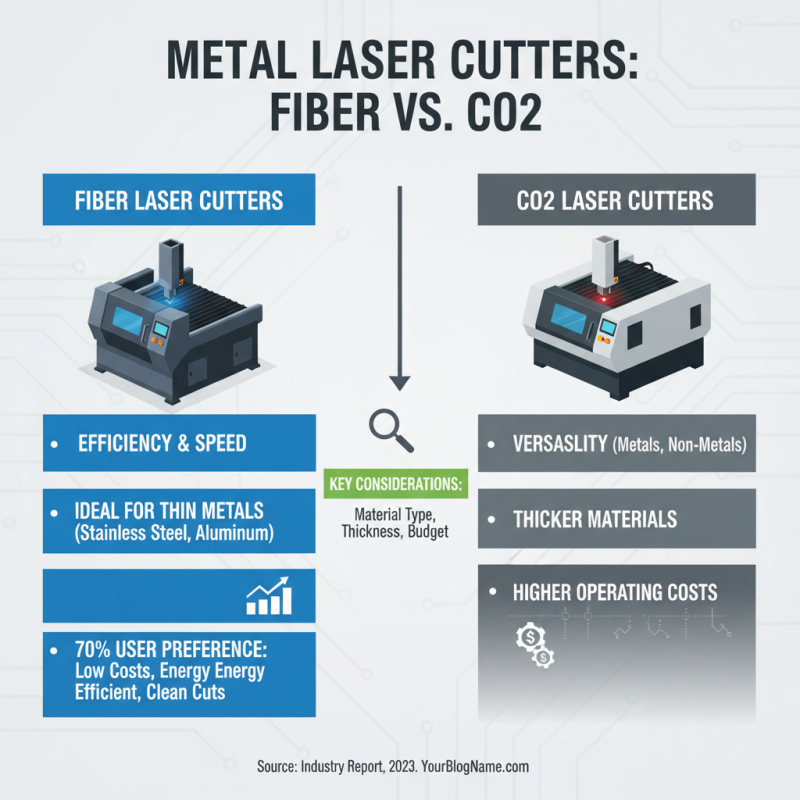
When exploring metal laser cutters, it is crucial to understand the different types available. Fiber laser cutters are known for their efficiency and speed, making them ideal for thin metals. According to a recent industry report, 70% of users prefer fiber lasers due to their energy efficiency and low operating costs. These machines can easily cut stainless steel and aluminum, providing cleaner edges with minimal material wastage.
Conversely, CO2 laser cutters excel when handling non-metal materials, but they can cut thin sheets of metal as well. Their initial cost is typically lower, which can attract budget-conscious buyers. However, they usually require more maintenance. A survey indicated that 40% of users who started with CO2 lasers transitioned to fiber lasers to enhance productivity. As a user, you must weigh the trade-offs between upfront costs and long-term efficiency.
Another option is hybrid laser systems, which combine the advantages of both fiber and CO2 technologies. This versatility can be an asset for projects requiring various materials. Nonetheless, these systems can be complex and may require a steeper learning curve. Many first-time users struggle with setup and calibration. Reflecting on these factors is essential for choosing the most suitable machine for home use.
Budget Considerations for Home Laser Cutting Machines
When selecting a metal laser cutting machine for home use, budget plays a crucial role. The prices can vary significantly based on features and capabilities. Entry-level machines may start at around a few hundred dollars. More advanced models can run into thousands. Assess what you need it for. If you plan to cut thicker materials or require precision, investing more upfront can save costs later.
Consider additional expenses, too. You’ll need to factor in maintenance, consumables, and any required software. Understand that a cheaper machine may require more frequent replacements or repairs. This can add up over time. Include the cost of workspace setup. Proper ventilation is essential for safety. Cutting machines need adequate space for operation, so don’t overlook this aspect.
Also, think about the learning curve. Some machines may have user-friendly interfaces. Others can be quite complex. If you’re a beginner, a user-friendly option may help. Balancing the initial cost with future usability can be tricky. Reflect on your project requirements. Not every home user needs a high-end machine. Sometimes a mid-range option serves just as well.